
Gear blogs got hit twice inside about a year, and neither hit had anything to do with writing quality. Search sends fewer clicks than it used to, and the clicks that still land are worth less in commission than they were last spring. Publishing more reviews does not fix either of those problems.
What is left is the traffic already on your page, and a lot of it leaves with a question still open. Someone finishes your tripod roundup wondering whether the head fits the plate they already own, checks Reddit for the answer, then buys through somebody else’s link. That question was the most valuable moment on the page, and nothing was sitting there to catch it.
An AI chat for gear review blogs exists to catch that question before the reader goes looking somewhere else.
- Organic CTR fell 61% on AI Overview queries in Seer Interactive's study of 3,100+ searches, and 68% of Google searches now end without a click
- Amazon cut associate rates by up to 50% in May 2026 and narrowed onsite attribution to the promoted product in April
- Reviews freeze on publish day, so fit, compatibility, head-to-head and last-year's-model questions get answered on Reddit instead
- The question is the intent signal. No public study measures this, so treat the mechanism as the argument
- Install is one async script tag at roughly 19KB gzipped, with no training step before the first answer
Ask ChatGPT to summarize the full text automatically.
Why Is Gear Review Traffic Falling Even When the Reviews Are Good?
The top of the funnel narrowed for everyone through 2025 and 2026, whatever niche you happen to write in. Seer Interactive tracked more than 3,100 queries and found organic click-through rate down 61% on searches that returned an AI Overview. Its write-up puts it plainly: “Organic CTR has been cut by nearly two-thirds.” Pages cited inside the overview held up better, at 0.70% organic CTR against 0.52% for uncited ones, which is the only encouraging number in the study.
SparkToro and Similarweb put the wider figure at 68% of Google searches ending with no click at all in early 2026, up from around 60% two years before. Those two numbers are why protecting the traffic you still get from AI Overviews turned into a live problem for review sites specifically.
Wirecutter is the cleanest evidence that this is not a content quality problem. It runs a full-time testing lab on a New York Times domain, and it still lost between 65% and 72% of its search visibility across Sistrix, Ahrefs and Semrush over a single summer. Ahrefs counted 3.6 million queries that dropped or vanished in six months.
The money side moved a few weeks later, in the same direction. Amazon cut associate commission rates by up to 50% in May 2026 and removed milestone bonuses along with them. April brought a narrower attribution rule. Amazon’s operating agreement update describes it as an “Updated calculation of onsite commission income to apply only to Direct Qualifying Purchases of the same ASIN variant as the linked Product detail page,” effective April 14, 2026, so whatever the reader wandered off and bought in the same category no longer pays you.
Both of those changes push a gear blog in the same direction. Fewer visits arrive than a year ago, each surviving visit is worth less commission, and the remaining lever is getting more out of the readers who already show up.
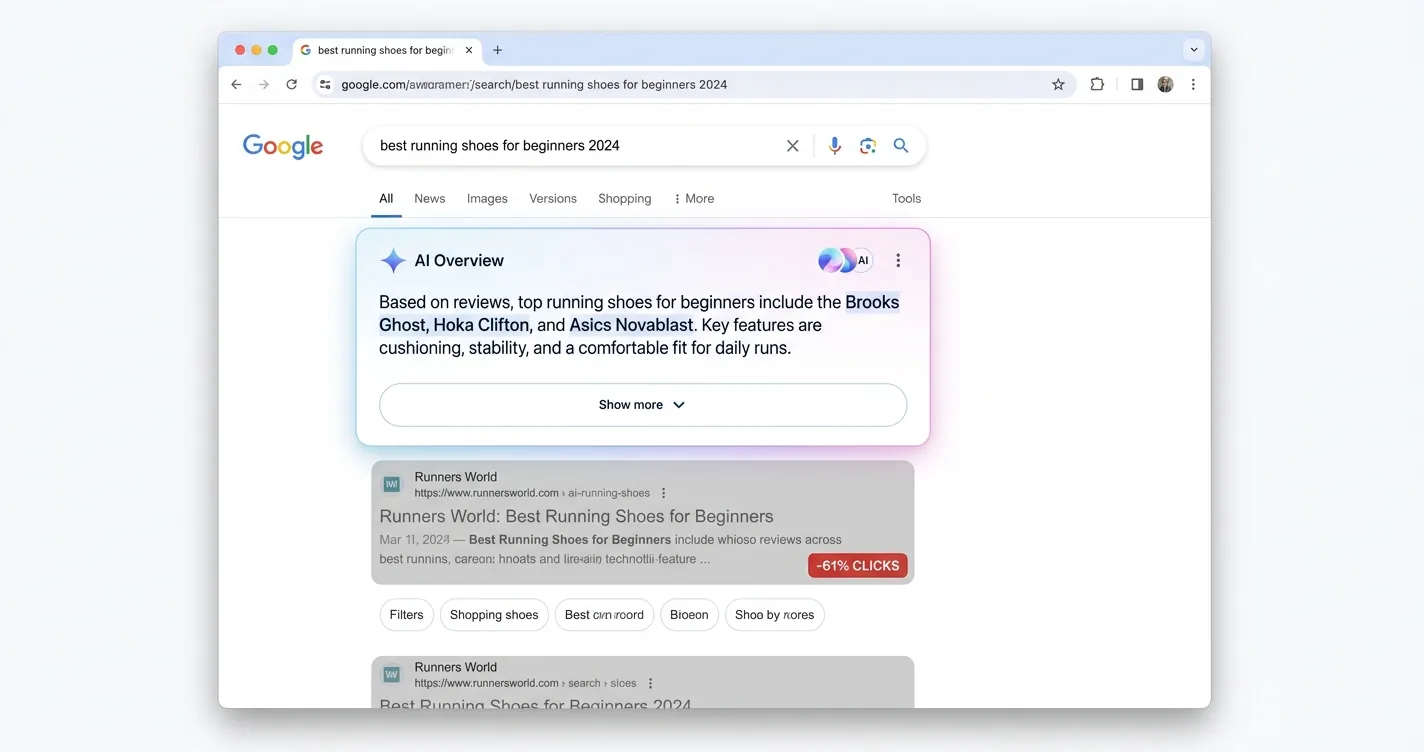
Published figures, not estimates
| Change | Size | Source |
|---|---|---|
| Organic CTR on AI Overview queries | Down 61% | Seer Interactive, 3,100+ queries |
| Google searches ending with no click | 68% of searches | SparkToro and Similarweb, 2026 |
| Wirecutter search visibility | Down 65% to 72% | Sistrix, Ahrefs, Semrush |
| Amazon associate commission rates | Cut up to 50% | Amazon, May 2026 |
| Amazon onsite attribution window | Promoted product only | Amazon, April 2026 |
What Does a Gear Review Structurally Fail to Answer?
A review gets written once, for a reader the writer has to invent, and then it freezes on publish day. Every real reader turns up carrying a constraint that invented reader never had. A 29-inch frame, a Sony E-mount body, a 34-inch inseam, a drawer already full of Type-C batteries.
Four question shapes fall out of that gap, and a static page handles none of them well. They sit in the gap between reading and buying, which is exactly what makes them expensive to leave hanging.
- Fit and sizing. Whether the medium works for a 34-inch inseam, or the 40mm case on a small wrist
- Compatibility with what they own. Mount, thread, battery standard, hub, rail spacing
- Head-to-head between two of your picks. You reviewed them in separate posts and never compared them directly
- Is last year's model good enough. The version you tested is not the version on sale today
These questions all get answered eventually, just not on your site. They get resolved in a subreddit, an Amazon Q&A thread, or a YouTube comment section, every one of which happens after the reader has left your page and before anybody’s affiliate link gets clicked.
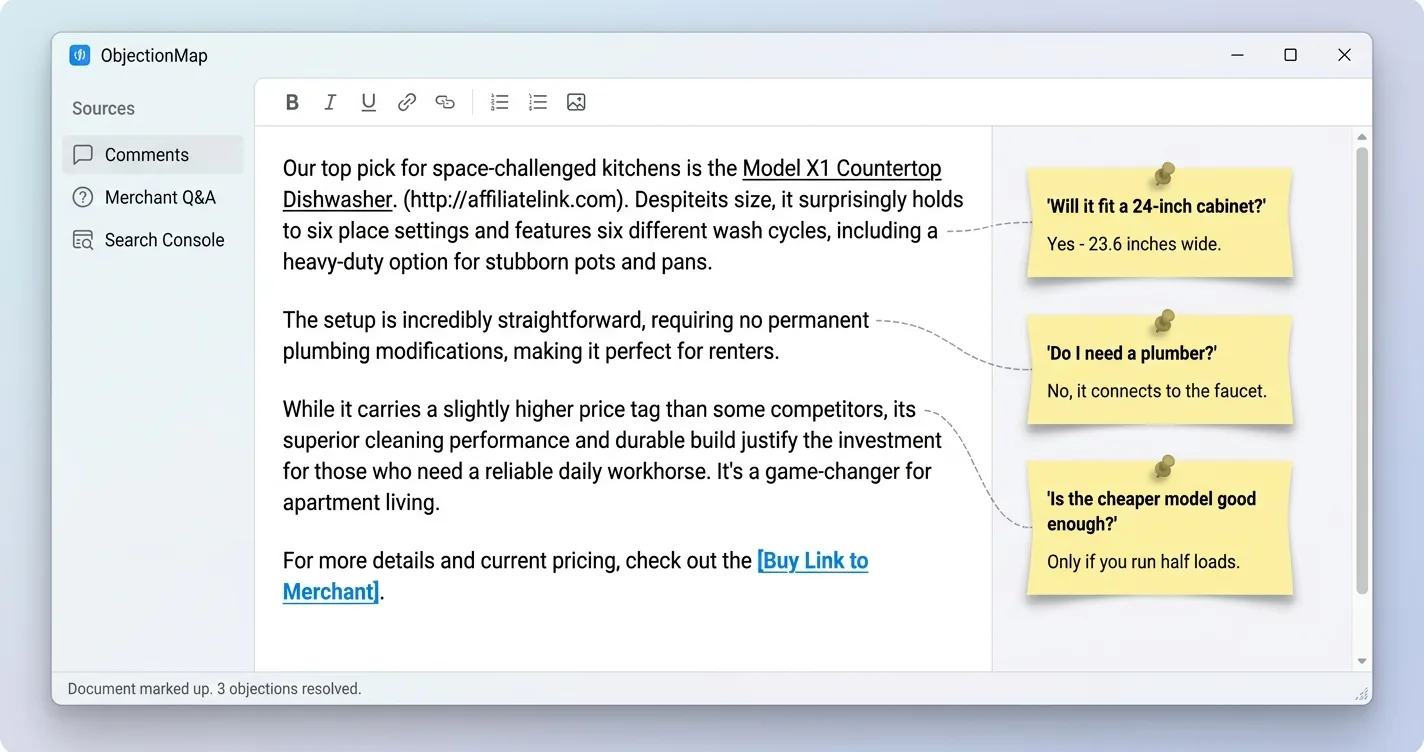
Why Does Answering a Follow-Up Question Convert Better Than the Review Itself?
Start with the honest part, because the claim in that heading has no public study standing behind it. Nobody has published data comparing conversion for readers who ask a follow-up against readers who only read the page. The argument below is mechanical, so weigh it on whether the mechanism holds rather than on a number somebody made up.
A reader skimming a roundup is still comparison shopping and has not committed to anything yet. A reader who types “will the 40mm case fit a size 8 wrist” has already picked the watch and is hunting for permission to buy it. The question itself is the intent signal, and it carries far more information than scroll depth or time on page ever could.
That distinction matters more now that each conversion pays less than it did. With rates cut, the same revenue requires a higher click-to-sale rate on the same traffic, and the available move is putting the right link in front of somebody at the moment their last objection clears.
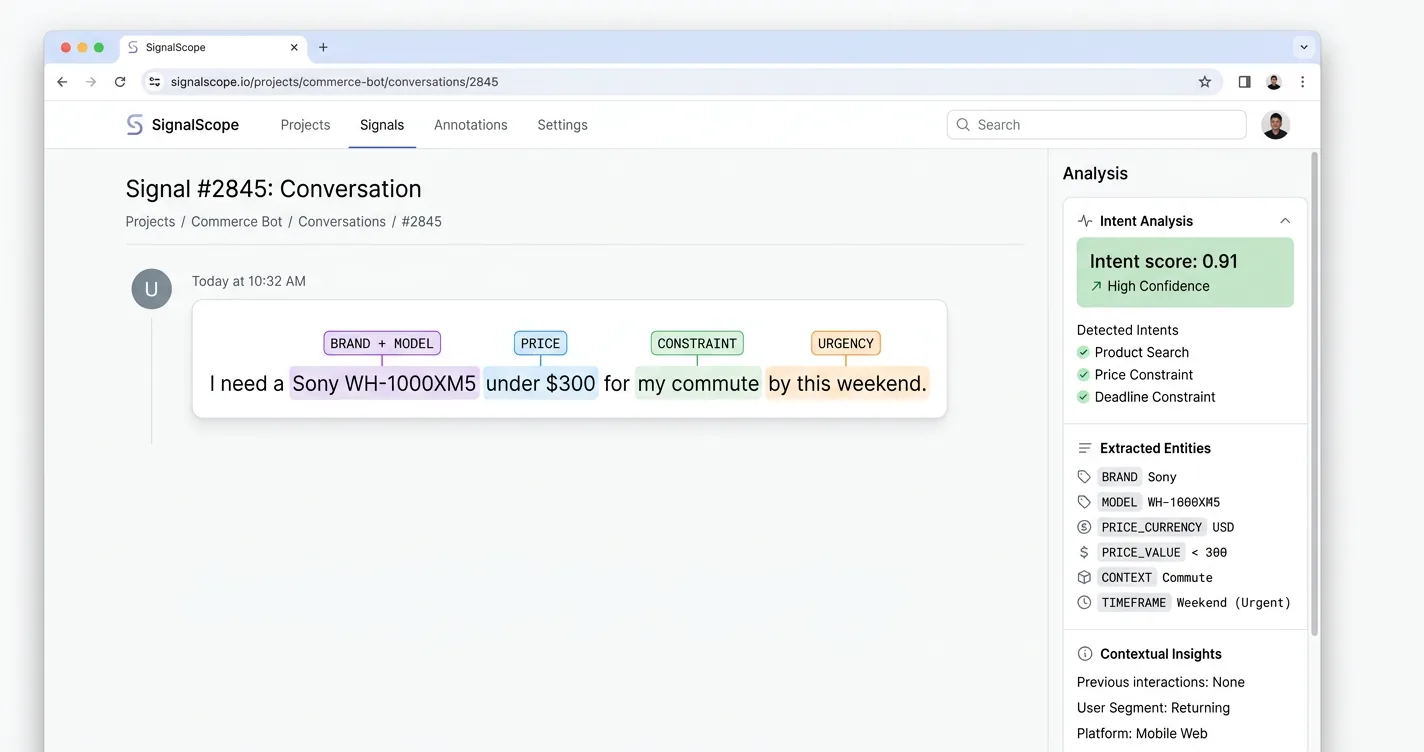
Read your chat logs before you tune anything else. The questions readers actually type are a free keyword list, and the ones that repeat are usually gaps you can fix in the review itself.
What Does an On-Page AI Assistant Actually Do on a Review Page?
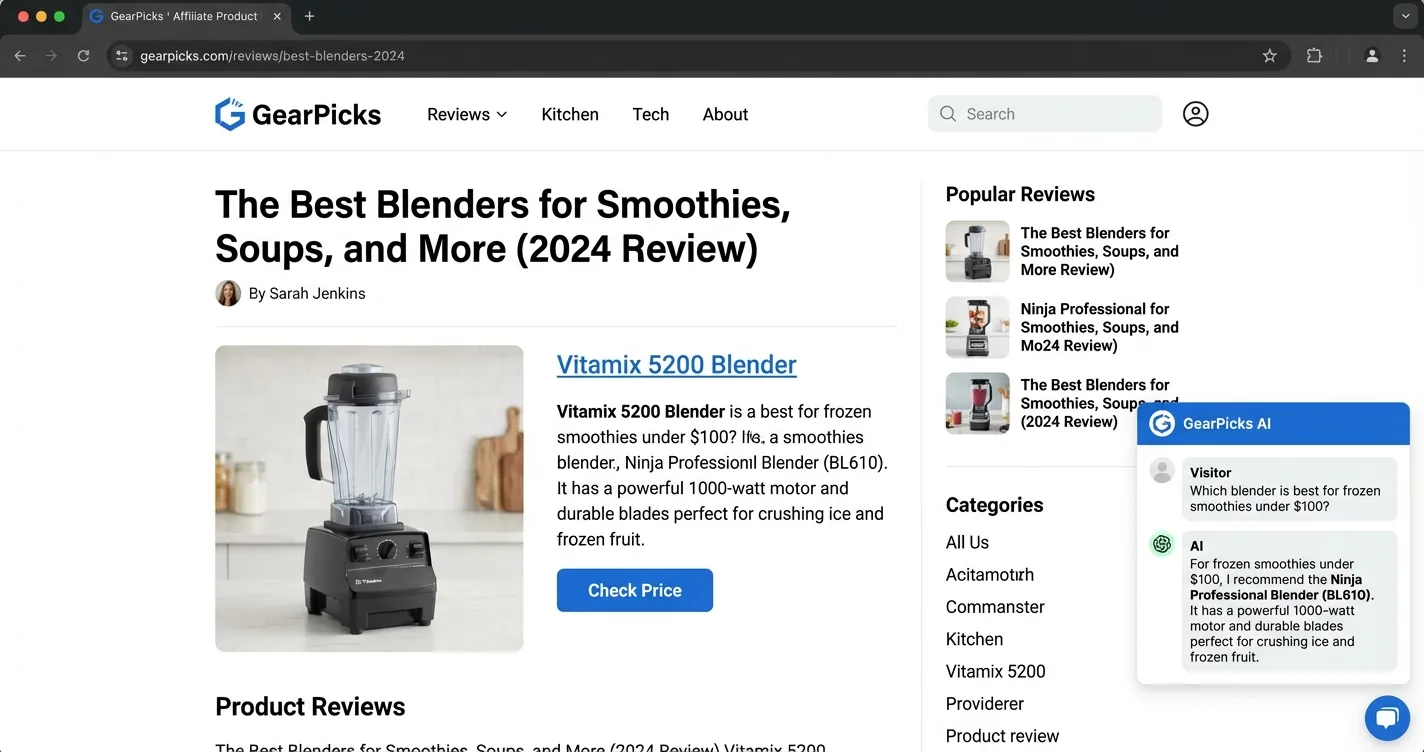
The widget reads the page it is sitting on, and that single detail is what turns a static review into an AI product recommendations blog. Your review’s prose, the spec table, the pick list and the comparison notes become the material it answers from, which is why no training project sits between installing it and getting a useful answer out of it.
Big publishers built this capability the hard way before anybody sold it as a widget. The Washington Post launched Ask The Post AI in November 2024, and TIME followed with an agent trained on nearly 750,000 magazine issues, web articles and other assets from its own archive, built with Scale AI.
Forbes got there first, building Adelaide on Google Cloud’s Vertex AI in 2023. Every one of those projects needed an engineering team and a vendor contract.
None of those publishers has released session length, questions per visit, or any other audience number, so nobody outside those companies knows how well it worked. The case for a gear blog is mechanical rather than benchmarked, and it is worth saying that plainly instead of quoting a statistic that does not exist.
ChatAds is a gear blog chatbot built around that same page-context read. It pulls from the page it loads on, so a review you published three years ago starts answering questions the day the tag goes live.
| Aspect | Publisher in-house build | Embedded widget |
|---|---|---|
| Examples | Ask The Post AI, TIME AI Agent, Forbes Adelaide | One script tag |
| Content source | Indexed archive, nearly 750,000 assets | The page it loads on |
| Setup work | Engineering team plus a vendor | Paste a tag in your theme |
| Published engagement data | None released | None released |
How Do Affiliate Links Get Into the Answers Without Wrecking Trust?
One rule separates a useful assistant from a spam bot. A link belongs in an answer only when the answer was going to name a product anyway.
Somebody asking about tripod thread compatibility wants a yes or no and then a part number, so a link to the adapter has earned its place in that reply. A bot that steers every question toward a purchase does the opposite, and it teaches readers that the panel is an ad rather than an answer. The survey data on whether readers trust an AI assistant on your blog points the same way, since hidden commercial motives rank near the top of what people distrust.
Disclosure is the other half, and the standard is older than chat itself. 16 CFR § 255.5 says that when a connection “might materially affect the weight or credibility of the endorsement, and that connection is not reasonably expected by the audience, such connection must be disclosed clearly and conspicuously.” The FTC has written no chat-specific rule, so that general standard governs whatever the interface looks like, which means the disclosure cannot hide behind a click or a collapsed panel.
ChatAds handles this with a disclosure line that stays visible in the chat panel rather than appearing once and scrolling away. Commissions run through your own affiliate accounts, and ChatAds takes none of them.
One async script tag, roughly 19KB gzipped, answers from the review page it loads on with no training step. Affiliate links appear inside answers that were naming a product anyway, disclosure stays visible in the panel, and publishers keep 100% of the commissions. Start free at getchatads.com.
Will This Hurt Your SEO or Your Ad Network Relationship?
The official documentation is narrower than the worry usually is. Google’s page on qualifying outbound links says to “mark links that are advertisements or paid placements (commonly called paid links) with the sponsored value,” never uses the word affiliate, and says nothing at all about links inserted by JavaScript. Marking them anyway costs nothing and removes the ambiguity.
Site reputation abuse is the second worry, and it points somewhere else entirely. That policy targets third-party content published on a host site mainly to borrow the host’s ranking signals, which is a syndicated coupon subdirectory rather than an answer your own page generated for a reader who asked for it.
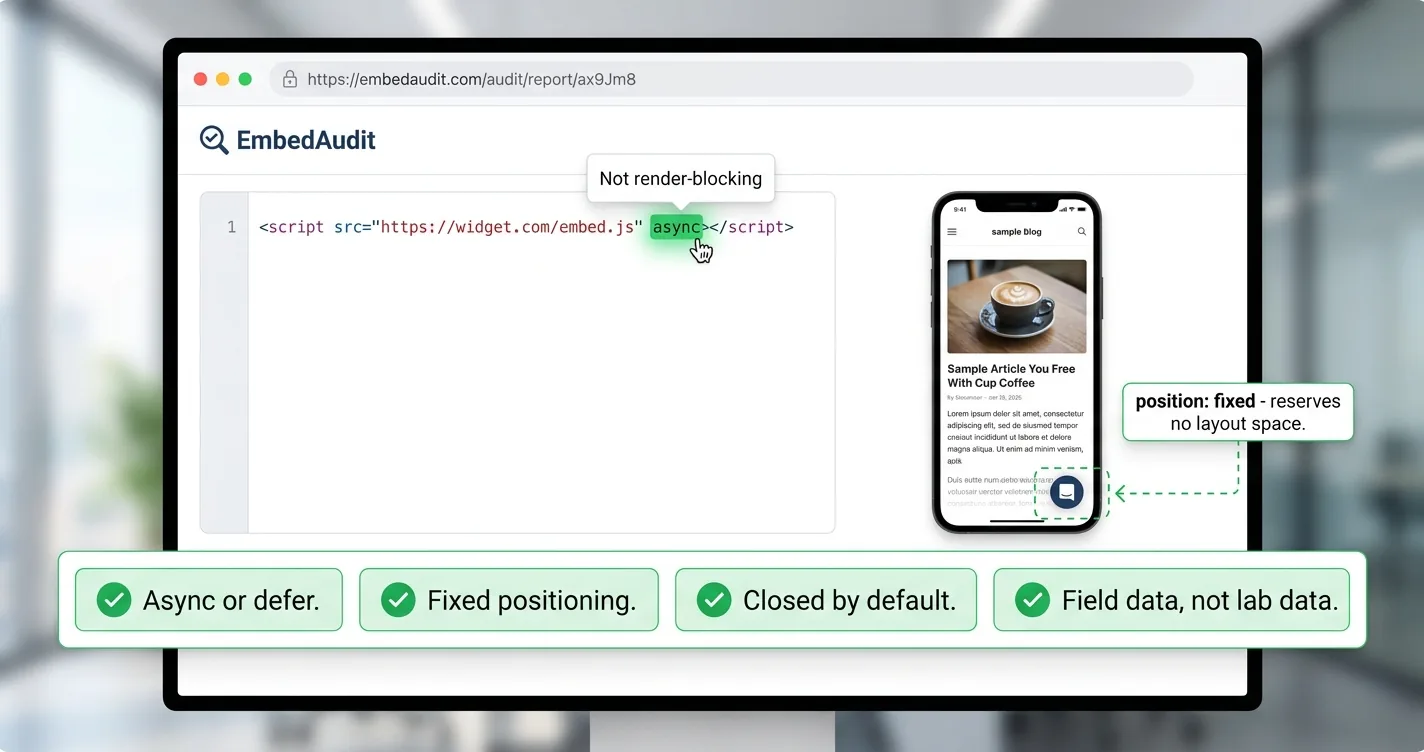
Page weight is the input you can actually measure before installing anything. Google’s threshold for a good Largest Contentful Paint is 2.5 seconds at the 75th percentile of page loads, and a widget that ships around 19KB gzipped and loads async is unlikely to move that. Payload varies enormously between chat vendors though, and it is worth checking before you commit to one.
Ad networks deserve their own answer rather than a sentence here, since placement matters more than policy does. The Mediavine and Raptive question comes down to keeping the bubble clear of adhesion units.
- Says: use
rel="sponsored"for advertisements and paid placements - Does not say: anything about affiliate links by name in that document
- Does not say: anything about JavaScript-injected or dynamically rendered links
- Site reputation abuse targets third-party content hosted to exploit a domain's ranking signals
How Do You Set One Up on a Gear Blog in an Afternoon?
The install itself is one line, and it is the least interesting part of the job. Drop the tag in your theme’s footer with your widget key attached, and the widget starts reading whatever page it loads on.
<script async src="https://www.getchatads.com/widget.js?key=cwk_your_widget_key"></script>
Three decisions after that tag goes live do the actual work. Choose which templates get it, since review and roundup pages carry buying intent while your about page and contact form do not. Decide what the assistant is allowed to recommend, then check whether free volume covers your traffic before paying for anything.
The volume math is easy enough to sanity check before you pay anything. A free ChatAds account handles 100 messages a day, roughly 3,000 a month, which is enough for most single-operator gear blogs to learn whether readers ask anything at all. Paid tiers start at $29 a month when you outgrow that.
Measurement is the step people skip first and regret about a month later. Tag your chat-sourced affiliate links separately from your in-body ones, because a blended report will never tell you which surface is earning the clicks.
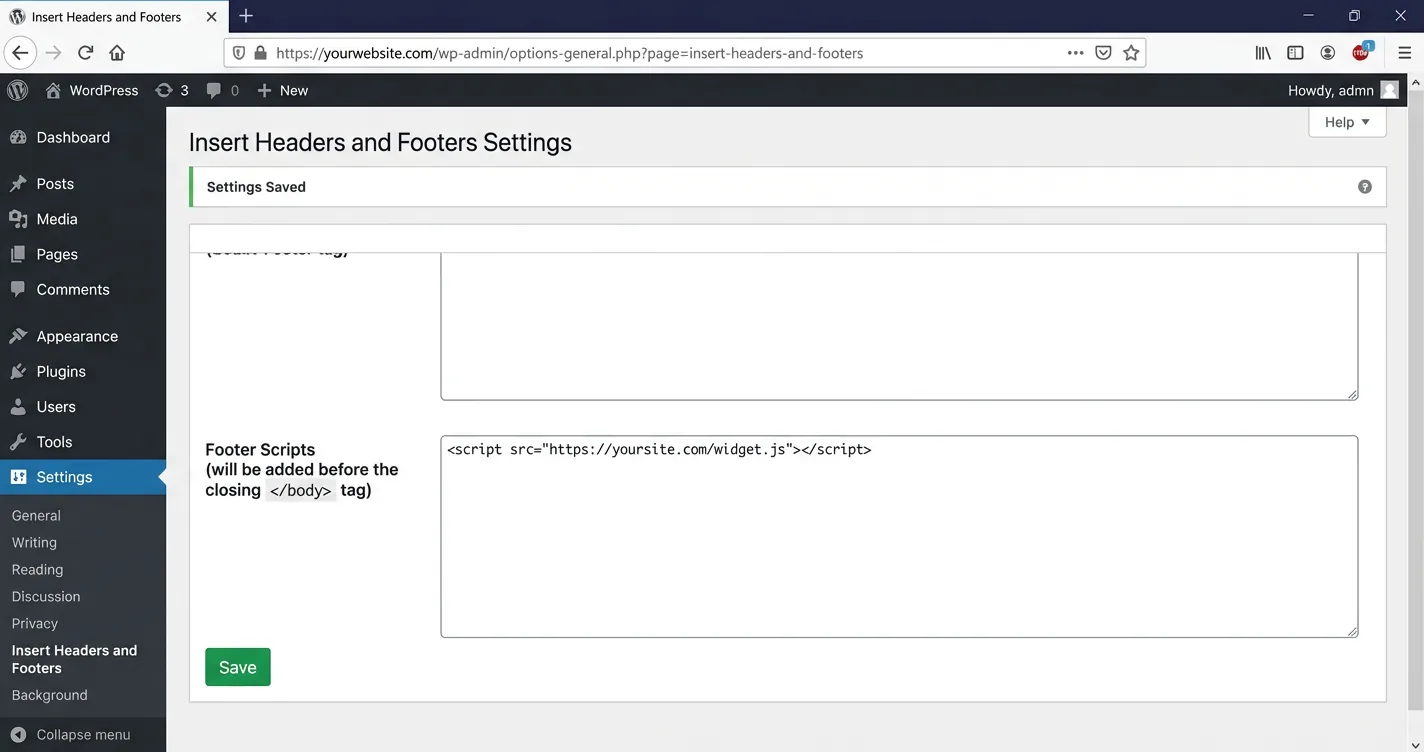
- Paste the tag into your theme footer and confirm the bubble renders on a live review
- Limit it to buying-intent templates first, then widen if the questions look useful
- Ask it your own hardest fit question and check the answer against the review
- Confirm the disclosure is visible in the panel without expanding anything
- Tag chat links separately so the first month of data means something
Neither of the two hits from last year is reversible, which is the part worth accepting early. Search will keep answering more questions before the click, and Amazon is not restoring the rates or the attribution window it took away in the spring.
What did not change is that a reader on your review page has already found you, and is one unanswered question away from buying something. Catching that question on the page is one of the cheapest ways to monetize a gear review blog.
AI Chat for Gear Review Blogs FAQ
What is an AI chat for gear review blogs?
It is a chat panel embedded on your review pages that answers reader questions using the content of the page it loads on. Readers ask about fit, compatibility or how two of your picks compare, and the assistant answers from your review instead of sending them to Reddit. Widgets like ChatAds also place affiliate links inside answers that name a product.
How does a gear blog chatbot make money?
It earns through affiliate commissions on links placed inside answers that were already naming a product. A reader asking which adapter fits their tripod gets the part number and a link to buy it. With ChatAds the links run through your own affiliate accounts, so you keep 100% of the commission.
What is the best affiliate chat widget for review sites?
Most embeddable chat widgets answer questions but leave the monetization to you, which means a support-style bot on a review page earns nothing. Look for one that reads the page without a training step, inserts affiliate links only when an answer names a product, and keeps a disclosure visible. ChatAds is built for that specific job and starts free.
Will an AI chat widget hurt my Core Web Vitals or SEO?
A widget that loads async and sits in a fixed-position bubble reserves no layout space, so it is unlikely to move LCP or CLS much. Payload is the number worth checking, since it varies enormously between vendors. Google's guidance on qualifying outbound links never mentions affiliate links or JavaScript-inserted links at all.
Do I need to disclose affiliate links inside a chat answer?
Yes. 16 CFR § 255.5 requires a material connection to be disclosed clearly and conspicuously, and the FTC has written no chat-specific exception. In practice the disclosure has to be visible in the panel rather than hidden behind a click or a collapsed section.
How do I monetize a gear review blog after the Amazon commission cuts?
With rates cut and attribution narrowed to the promoted product, the same revenue now needs a higher click-to-sale rate on the traffic you already have. That means converting more of the readers already on the page rather than chasing new visits. Answering the buying question on the page is one of the cheapest ways to do it.