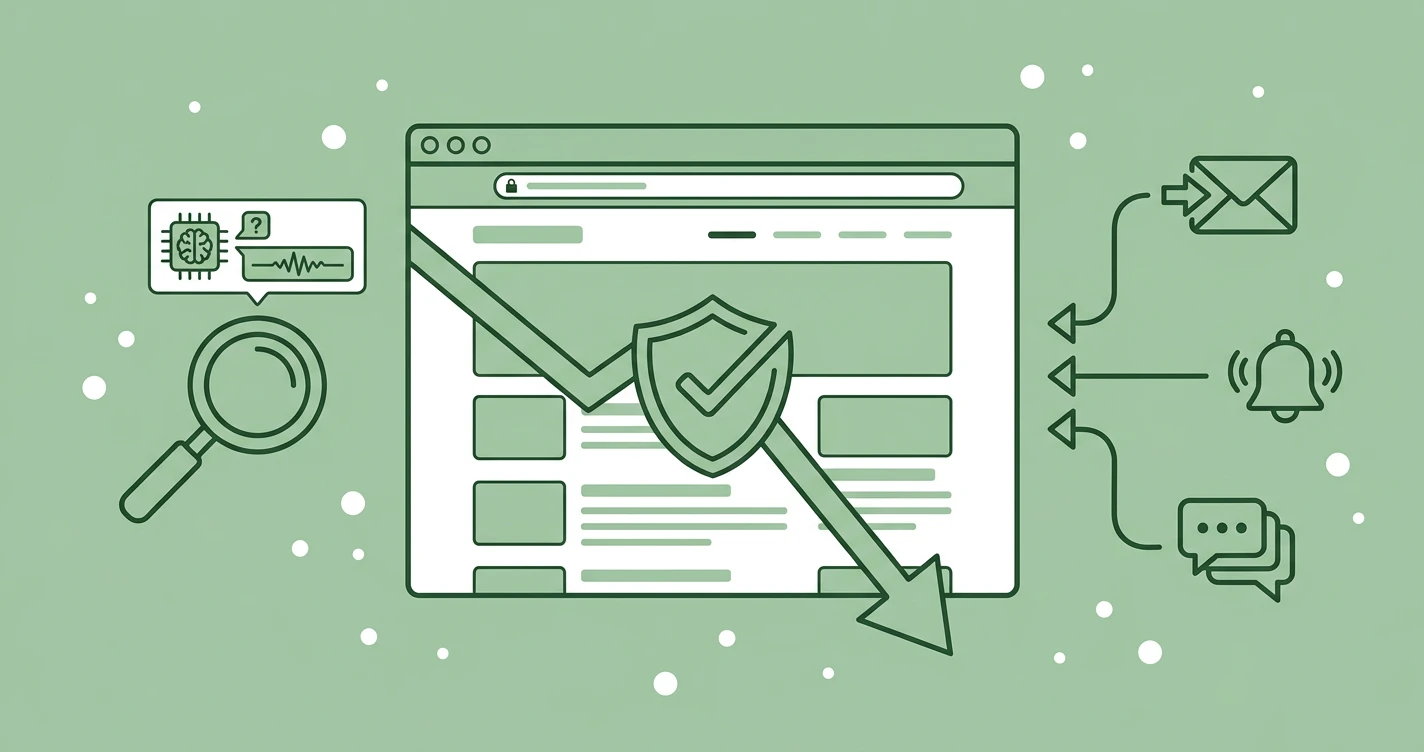
Search traffic for most blogs looks very different than it did two years ago. Google now answers questions right on the results page, and readers get what they need without clicking through. That shift has a name, AI Overviews, and it is reshaping who gets the visit.
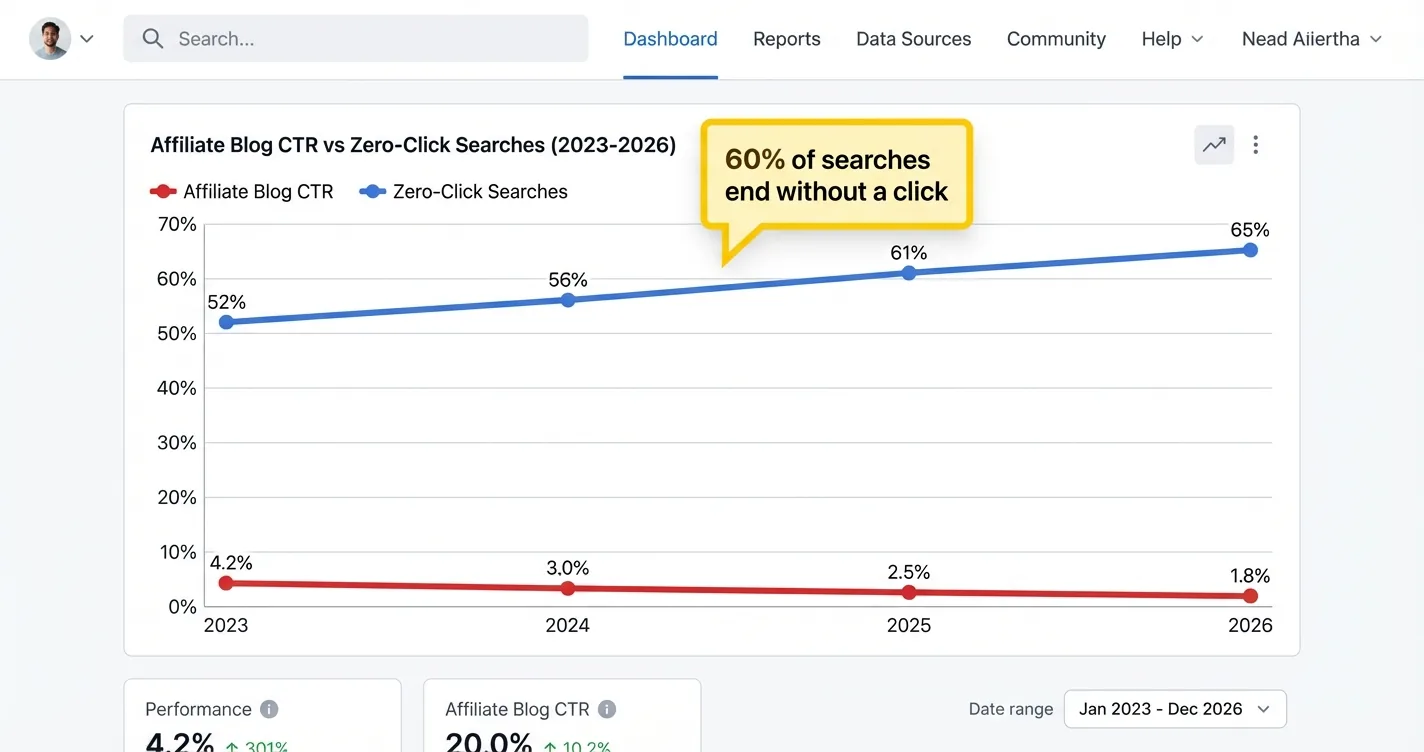
The damage shows up clearly once you look at the numbers. When an AI summary appears, people click a result far less often, and a growing share of searches now end with no click at all. SparkToro founder Rand Fishkin, who has tracked this shift for years, reports that “In the first four months of 2026, a whopping 68.01% of Google searches ended without a click.” For publishers who built their traffic on Google, that is a real problem heading into 2026.
You cannot stop AI Overviews, but you can change how much they cost you. This guide walks through practical ways to protect your blog traffic and keep readers and revenue coming in. For the full data picture on how this is playing out across niches, see is affiliate blogging dead in 2026?
Stop depending on the Google click. Own your audience, publish what an AI cannot summarize, and earn more from each reader who does show up.
Ask ChatGPT to summarize the full text automatically.
What are AI Overviews doing to your traffic?
The scale of the change is bigger than most publishers realize. Google now writes an answer at the top of many results, and that box absorbs the click that used to come to your post. Readers scan the summary, feel satisfied, and move on.
Independent research backs this up, and the numbers are consistent. Pew’s July 2025 analysis of nearly 69,000 searches put it plainly: “Users who encountered an AI summary clicked on a traditional search result link in 8% of all visits. Those who did not encounter an AI summary clicked on a search result nearly twice as often (15% of visits).” Ahrefs measured a 58% drop in click-through for the top organic result once an AI Overview appears above it.
| Metric | Without AI Overview | With AI Overview |
|---|---|---|
| Chance a user clicks any result | 15% | 8% |
| Top-result click-through | Baseline | Down 58% |
| Searches ending with no click | ~60% (2024) | 68% (2026) |
The hardest part is that stable rankings no longer protect you. One lifestyle publisher watched click-through slide from 5.1% to 0.6% while its rankings held steady. You are now competing inside a search where most readers never leave the results page.
Which content is getting hit hardest?
Not every blog post loses traffic at the same rate. AI Overviews replace answers that fit in a sentence or two, so definitional and how-to posts take the biggest hit. Opinion, hands-on reviews, and buying advice hold up much better because a summary cannot stand in for them.
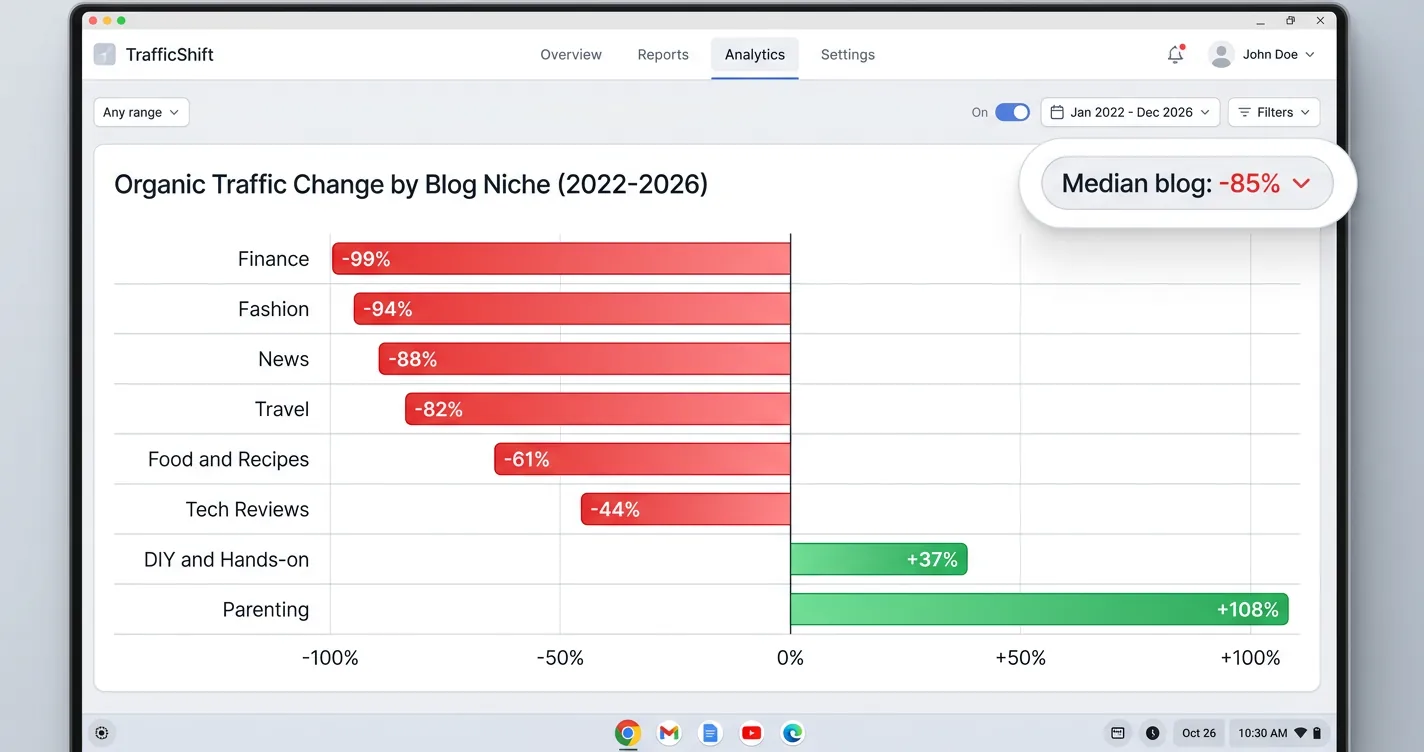
A study of 100 blogs across four years shows how uneven the damage is. The median blog lost 85% of its organic traffic, but the spread by niche was enormous. Finance and fashion sites were gutted while a few hands-on categories actually grew. Travel sat in the middle of the pack, and our playbook on adding an AI assistant to a travel blog covers how those sites can earn more from the readers they still get.
- Definitions and "what is" explainers that fit in one summary
- Basic how-to steps a reader can skim in seconds
- Roundups of public facts with no first-hand testing
- Generic answers that any model already knows
Run this filter across your library and sort posts into exposed and defensible piles. The exposed ones are your front line, and they need a different plan than the posts built on your own experience. Commercial queries with buying intent used to feel safer, but Semrush data shows AI Overviews spreading into those too.
How do you own an audience Google can’t intercept?
The strongest defense is a direct line to readers that Google cannot sit between. Email newsletters, push and messaging alerts, and small communities are made of people who already chose to hear from you. No algorithm decides whether they see your work.
The publishers weathering this best treat owned channels as a core metric. Pinch of Yum nearly doubled email’s share of its traffic while direct visits fell sharply. Reach plc built millions of WhatsApp alert recipients so it could reach readers without waiting on search. People Inc. CEO Neil Vogel frames the urgency bluntly: “Referral traffic is declining, and the decline is growing more pronounced every quarter.”
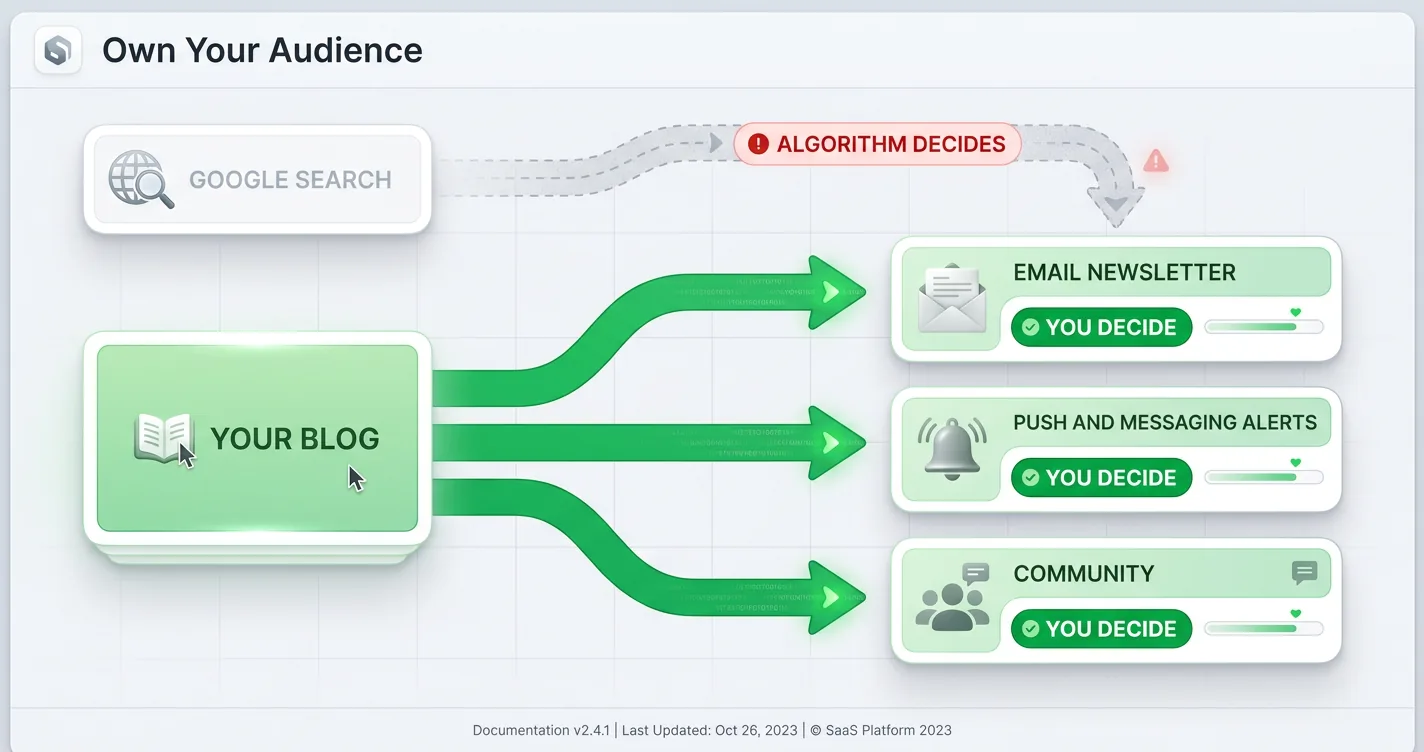
Put the offer where attention peaks, mid-article and at the end, and give a real reason to join, like a checklist or a members-only guide. Then track owned-channel share as a headline number, not a footnote.
An email list also compounds in value while organic search shrinks. Every post becomes a chance to convert a one-time visitor into a subscriber you can reach again for free. That relationship is the asset AI Overviews cannot touch.
What content can an AI not summarize?
Shift your editorial weight toward work a short AI summary cannot replace. First-hand testing, original data, sharp opinion, and buying recommendations all require trusting a real person’s judgment. Those are the posts readers still click through to find.
Bauer Media moved resources away from car spec pages, which any model can recite, and toward buying advice that reflects real driving. Branded and franchise content actually gains click-through because people search for your name on purpose. The pattern is clear once you look for it.
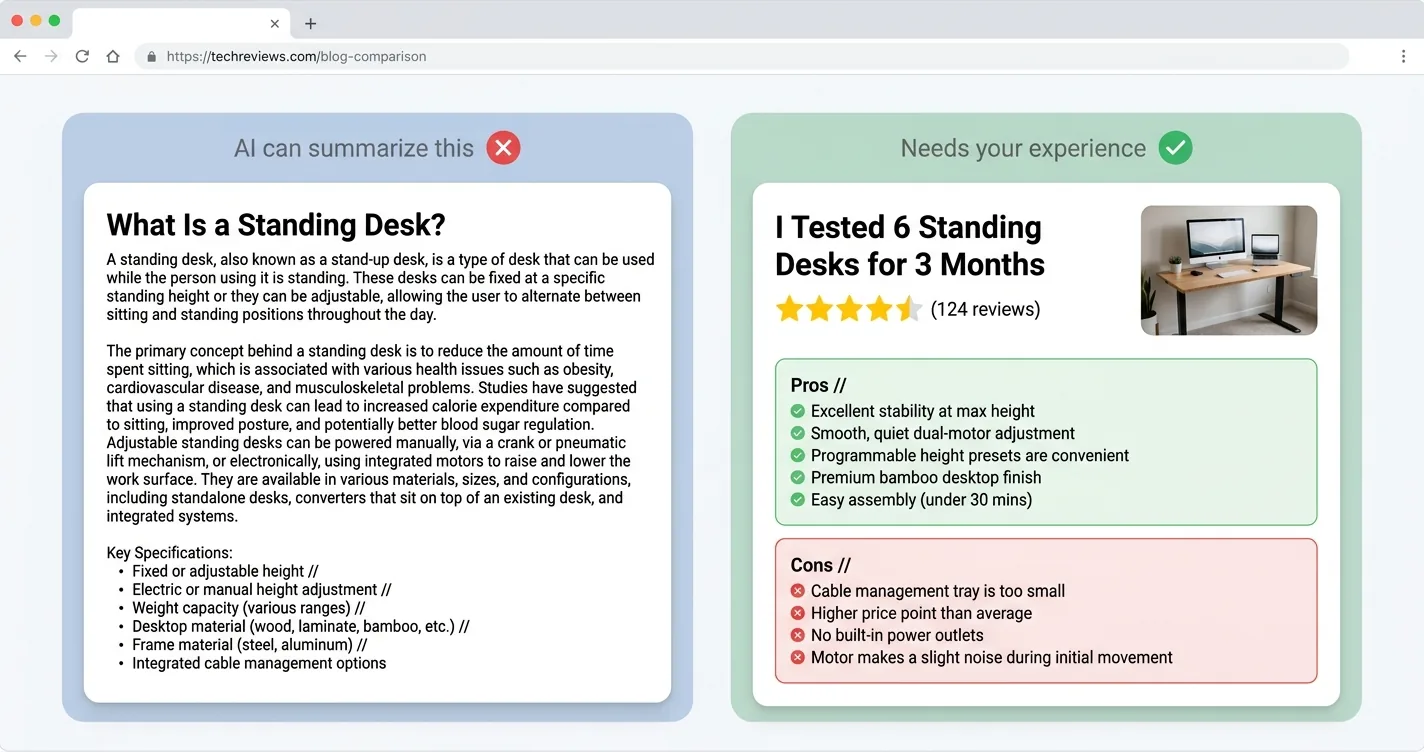
If an AI could write the post from public facts alone, it is exposed. If the post needs your testing, your data, or your opinion to exist, it is defensible. Aim more of your calendar at the second kind.
This does not mean abandoning SEO; it means changing what you rank for. Publishing the recommendations, comparisons, and lived experience that a summary flattens gives readers a reason to keep choosing your page. It is the same instinct behind writing new posts versus deepening reader engagement.
How do you make every visit worth more?
When raw pageviews fall, depth per visit becomes the lever you can still pull. Interactive tools, calculators, and recommendation modules keep readers on the page and pull them to a second and third one. A shorter list of readers can still add up if each does more.
The Arena Group is engineering a jump from 1.1 to 2.0 pages per visitor, and it values those dwell-time gains in the millions. Interactive content lifts conversion by roughly 40% compared with static pages, according to interactive-content vendor studies. Static explainers are exactly what AI Overviews replace, so swap them for something a summary cannot reproduce.
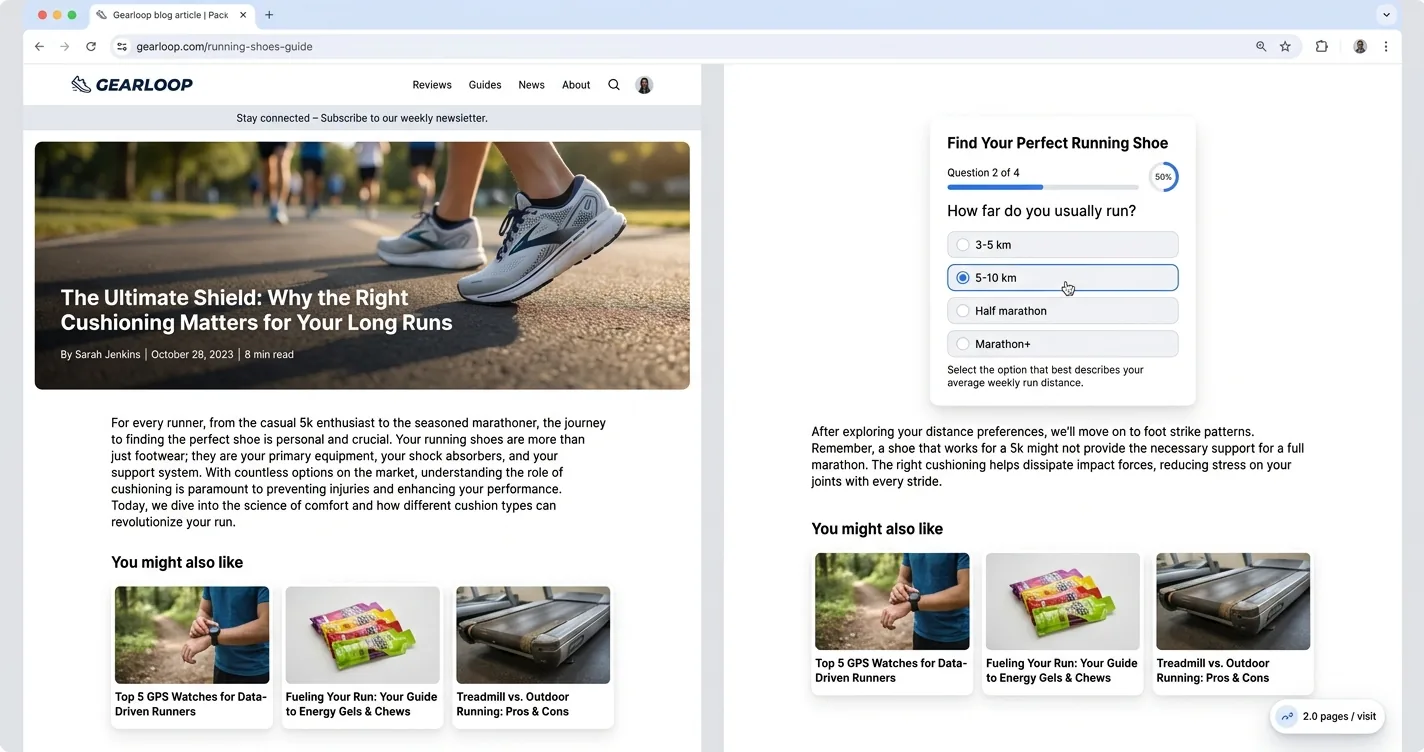
Doubling pages per visit can offset a large drop in first-touch traffic. One engaged reader who views three pages is worth more than three readers who bounce after the answer they came for.
The goal is to earn the next click yourself instead of losing it to the search results page. Every extra minute on your site is a minute not spent back in Google’s results. Design pages that invite a follow-up action rather than ending the visit.
Can an on-page AI assistant keep readers on your site?
The most direct counter to zero-click search is to move the conversation onto your own page. Readers still have follow-up questions after they land, and right now they take those questions back to Google. An on-page AI assistant answers them where you keep the engagement and the reader.
An embeddable assistant that already understands your content responds to reader questions inline, surfaces related posts, and turns a one-and-done visit into a back-and-forth. The engagement that AI Overviews stole at the results page happens on your site instead. It installs with one line of JavaScript, with no code or model training required. If you are wondering whether that script costs you anything at the search end, an AI chat widget only hurts your SEO when it is heavy or loaded badly.
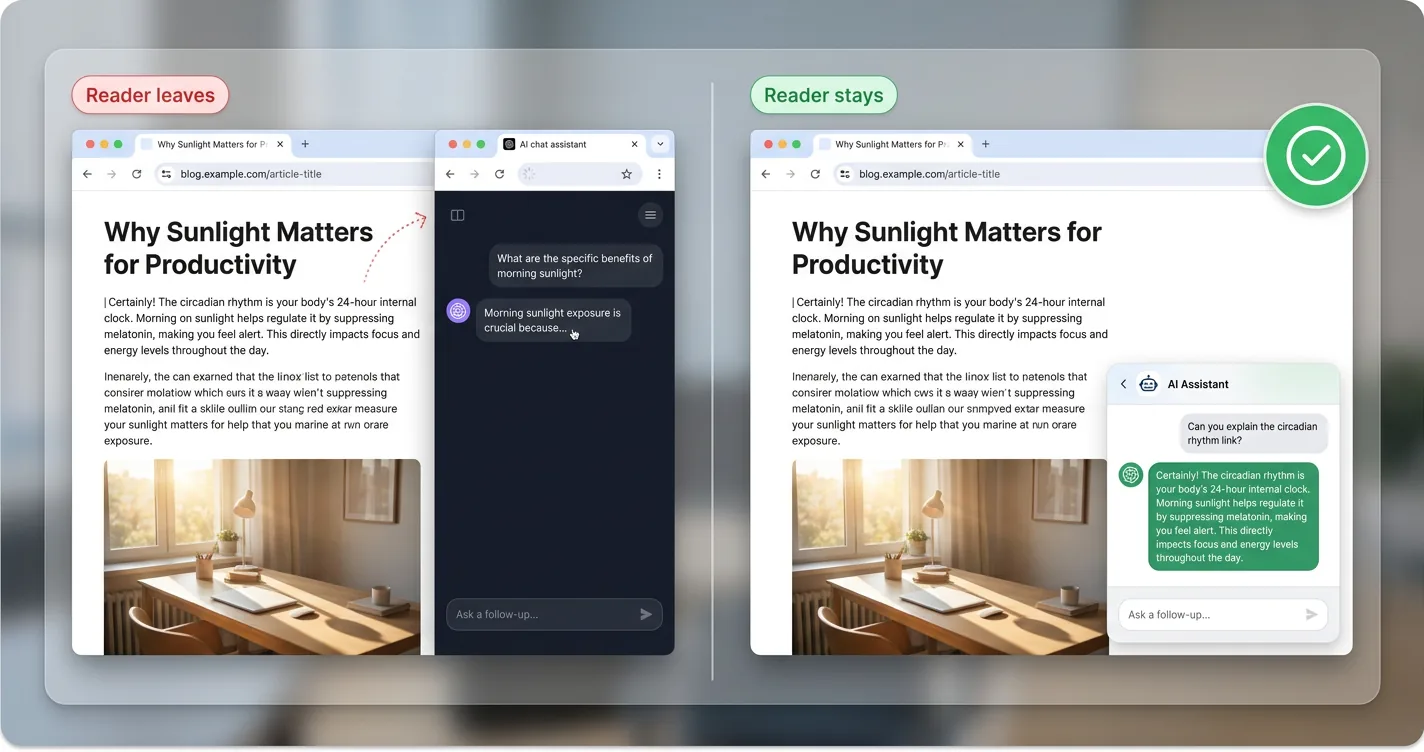
ChatAds is a free embeddable AI chat widget for blogs. It answers reader questions on your page and can weave in relevant affiliate links as it recommends products, so those conversations monetize too. You keep 100% of the commissions. See how to add a chatbot to your affiliate blog.
Where else can readers discover you?
Single-point dependence on Google is the root risk, so build other paths to your work. Reddit referrals are climbing fast for many publishers, with some seeing referral traffic from the platform more than double since early 2024. Social, YouTube, and video rebuild the top of your funnel that search used to fill. It mirrors how the biggest publishers are adapting; People Inc. concluded that “we need to aggregate audience from as many sources as possible.”
There is also GEO, or writing so an AI cites your page inside its answer. Getting cited recovers some visibility and can lift organic click-through when readers recognize your brand. It is worth pursuing, but go into it with clear eyes about how shaky the results can be.
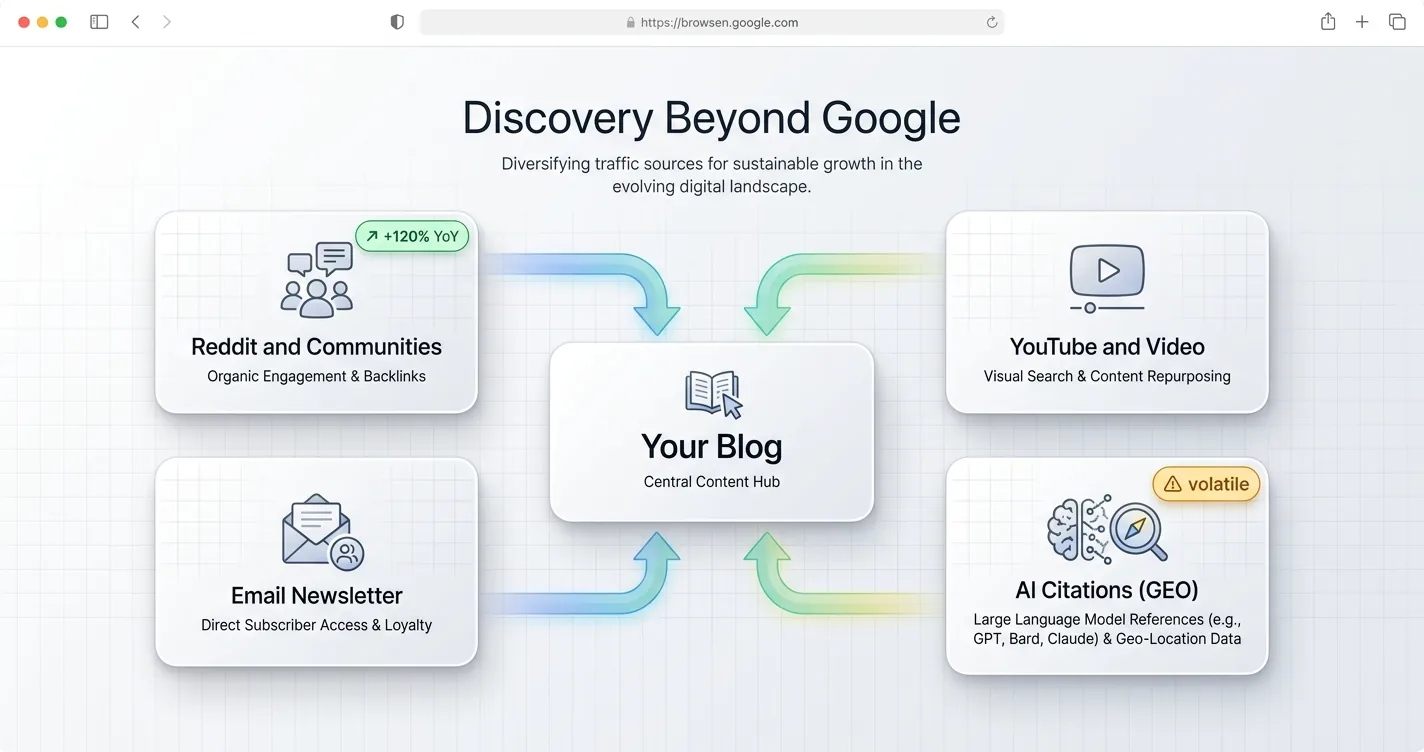
| Channel | What It Does | Reliability |
|---|---|---|
| Reddit and communities | Rising referral source, high engagement | Medium |
| YouTube and video | Rebuilds top-of-funnel discovery | Medium |
| AI citations (GEO) | Visibility inside AI answers | Low, volatile |
You should treat AI citations as a supplement, never as your foundation. One publisher saw its AI-citation share collapse from 60% to 10% in six weeks after a single model update. Spread your bets so no one channel can sink you.
How do you earn more from the traffic you keep?
Fewer visitors can still mean flat or growing revenue when each visitor is worth more. That means moving past raw-pageview ad models toward affiliate income, curated deals, events, and engagement-based monetization. The math shifts from counting heads to counting dollars per reader.
Arena’s curated deals run at 1.5x higher CPMs than standard placements, and People Inc. grew its licensing and other revenue 26% year over year as it leaned into contextual and off-platform income.
For a blogger, the most direct version is in-content affiliate links plus monetized on-page interactions. A smaller, engaged audience can make more money from your blog without more traffic than a larger one that bounces.
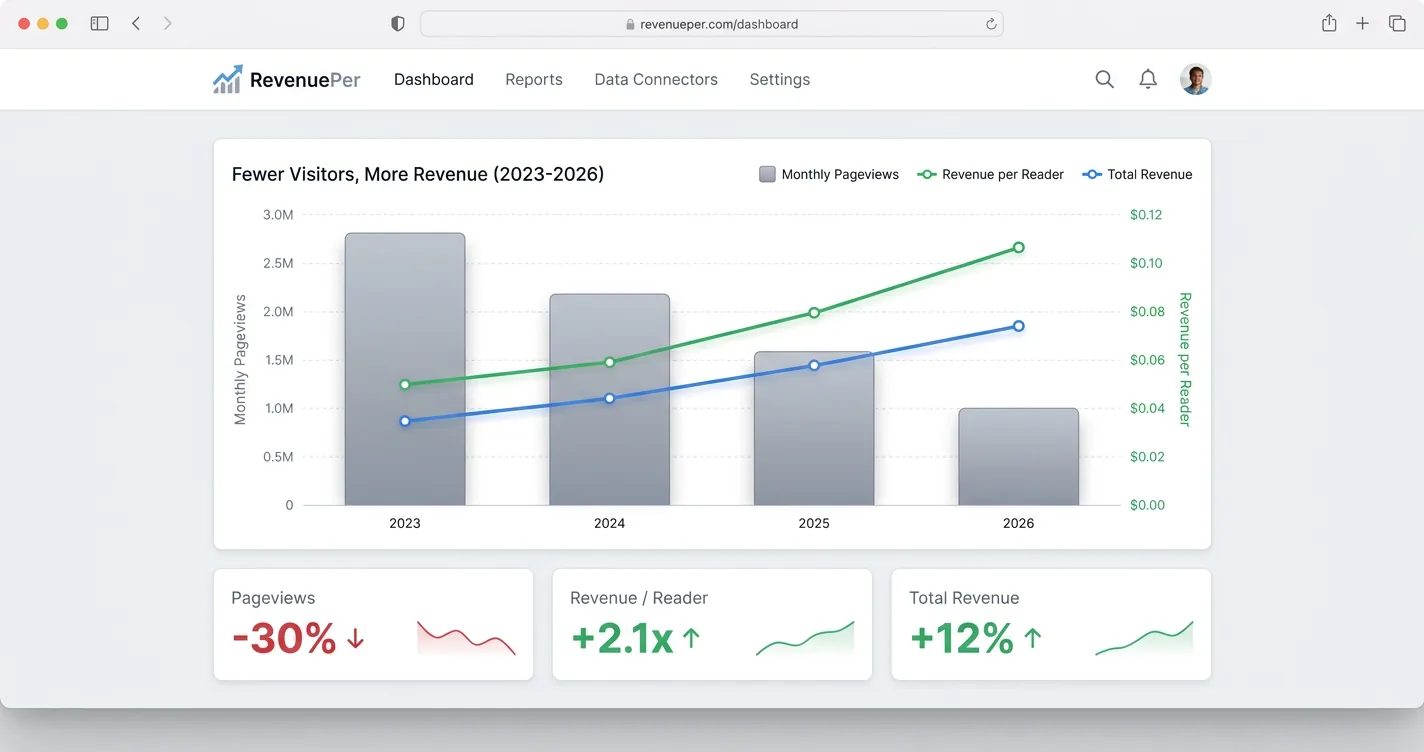
If traffic falls 30% but revenue per reader doubles, you come out ahead. Track earnings per visit as closely as you track sessions, and put effort where each reader is worth the most.
This is where all the earlier moves start paying off together. Owned channels, defensible content, and on-page engagement all raise the value of the readers you keep. Pair them with in-content affiliate links and proven ways to monetize AI chatbots, and a shrinking search funnel stops being an existential threat.
The traffic game has changed, and pretending otherwise only delays the reckoning. AI Overviews reward publishers who own their audience, publish what a summary cannot replace, and earn more from every reader who arrives. Start with the posts most exposed to zero-click search and work down the list.
Protecting your blog is less about clawing back the old Google click and more about needing it less. Build the direct relationships, the on-page engagement, and the per-reader revenue that hold up no matter what Google puts at the top of the page.
Frequently Asked Questions
How do AI Overviews reduce blog traffic?
AI Overviews answer a search directly on the results page, so readers get what they need without clicking through. Pew found users click a result only 8% of the time when an AI Overview appears, versus 15% without one. That gap turns into lost blog traffic even when your rankings hold steady.
Which blog content is most affected by AI Overviews?
Definitional posts, basic how-to guides, and roundups of public facts are hit hardest because a short summary can replace them. First-hand reviews, original data, strong opinion, and buying advice hold up better. Audit your library and treat the summarizable posts as your front line.
What is zero-click search?
Zero-click search is a search that ends without the user visiting any external website. By early 2026, about 68% of Google searches ended with no click, up from roughly 60% in 2024. AI Overviews are a major driver because they answer the query in the results themselves.
How can publishers protect traffic from Google AI Overviews?
Build direct channels like email, push, and communities so you can reach readers without search. Publish content an AI cannot summarize, such as testing, data, and opinion. Then raise engagement and revenue per visit so a smaller audience still performs.
Can an on-page AI assistant help with zero-click search?
Yes. An embeddable assistant trained on your content answers reader follow-up questions on your page instead of sending them back to Google. That keeps engagement on your site and can monetize the conversation through in-line affiliate links. ChatAds offers this as a free widget you install with one line of JavaScript.
Do stable Google rankings still protect blog traffic in 2026?
No. AI Overviews can cut your click-through even when your position does not move. One publisher watched click-through fall from 5.1% to 0.6% at stable rankings. Ranking well is no longer the same as receiving the visit.
Is optimizing for AI citations a reliable traffic strategy?
It helps but it is volatile. One publisher saw its AI-citation share drop from 60% to 10% in six weeks after a single model update. Treat AI citations as a supplement to owned channels and defensible content, never as your foundation.