Search traffic to independent blogs is shrinking, and most publishers can already feel it in their monthly numbers. Google referrals to the open web fell around 33 percent globally through late 2025, and how-to and lifestyle sites are losing clicks faster than news. The growth engine that fed affiliate income for a decade is quietly stalling out.
Chasing more traffic used to be the standard answer, but that well is running dry for almost everyone right now. The real opportunity in 2026, if you want to make more money from your blog, is raising what each visitor is worth before they leave. You control that number far more than you control what Google decides to send you.
Below are seven practical ways to monetize blog traffic and grow revenue per visitor, without adding a single new pageview.
- Google referrals to the open web fell sharply through 2025 as AI answers absorbed clicks
- An engaged eight-page session can be worth a $400 session RPM against a $50 page RPM on identical traffic
- On-page conversion tweaks lifted revenue per visitor 43% in one controlled test
- Premium ad networks routinely pay several times more than AdSense for the same impressions
- Chat-engaged shoppers are 2.8x more likely to convert than readers who never engage
Ask ChatGPT to summarize the full text automatically.
How Do You Measure Revenue Per Visitor?
Most bloggers still judge income by page RPM, the revenue earned per thousand pageviews. That number hides the real story, because it treats a reader who visits one page the same as one who reads eight in a session.
Session RPM and EPMV fix that blind spot by measuring revenue per thousand visitors across a whole visit. As Playwire’s team explains, “Page RPM treats these as 5 separate revenue opportunities, while session RPM correctly recognizes this as revenue from one engaged visitor” (source). An engaged eight-page session can be worth a $400 session RPM against a $50 page RPM on identical traffic. The gap is engagement, and engagement is something you can actually build over time.
Page RPM quietly rewards stuffing more ads onto more pages, which burns reader trust for a short-term bump. EPMV rewards keeping people around and converting them, so it lines up with every other tactic in this guide. Make affiliate income per visitor your yardstick before you change anything else, the same way revenue per message reframes chatbot income.
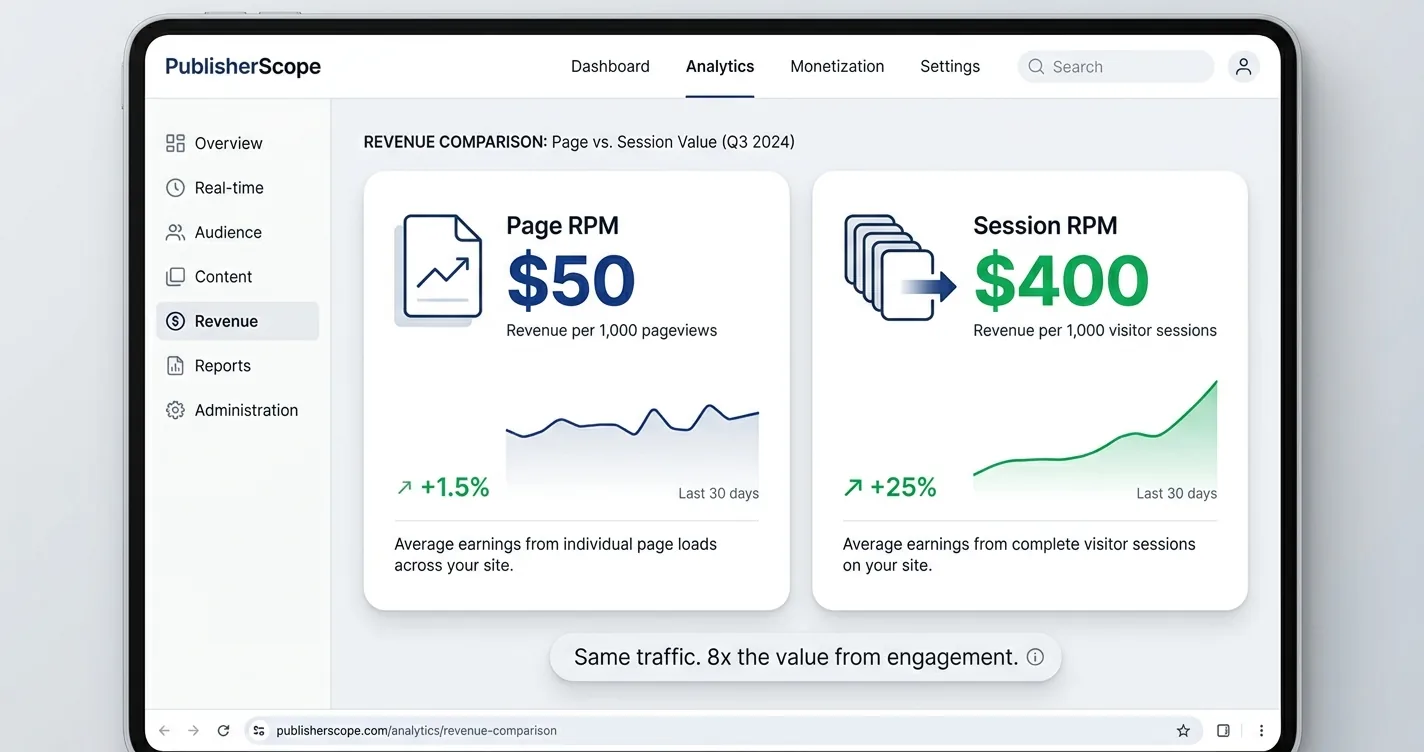
Illustrative eight-page engaged session (Playwire example)
| Metric | What It Counts | Example Value |
|---|---|---|
| Page RPM | Revenue per 1,000 pageviews | $50 |
| Session RPM | Revenue per 1,000 visitor sessions | $400 |
| EPMV | Earnings per 1,000 visitors, all sources | Rewards engagement, not ad count |
Which Posts Should You Optimize First?
A handful of your posts almost certainly drive most of your affiliate income, while the long tail earns pennies. Pull your analytics, sort pages by affiliate revenue, and find the top 20 percent of posts that carry roughly 80 percent of that income.
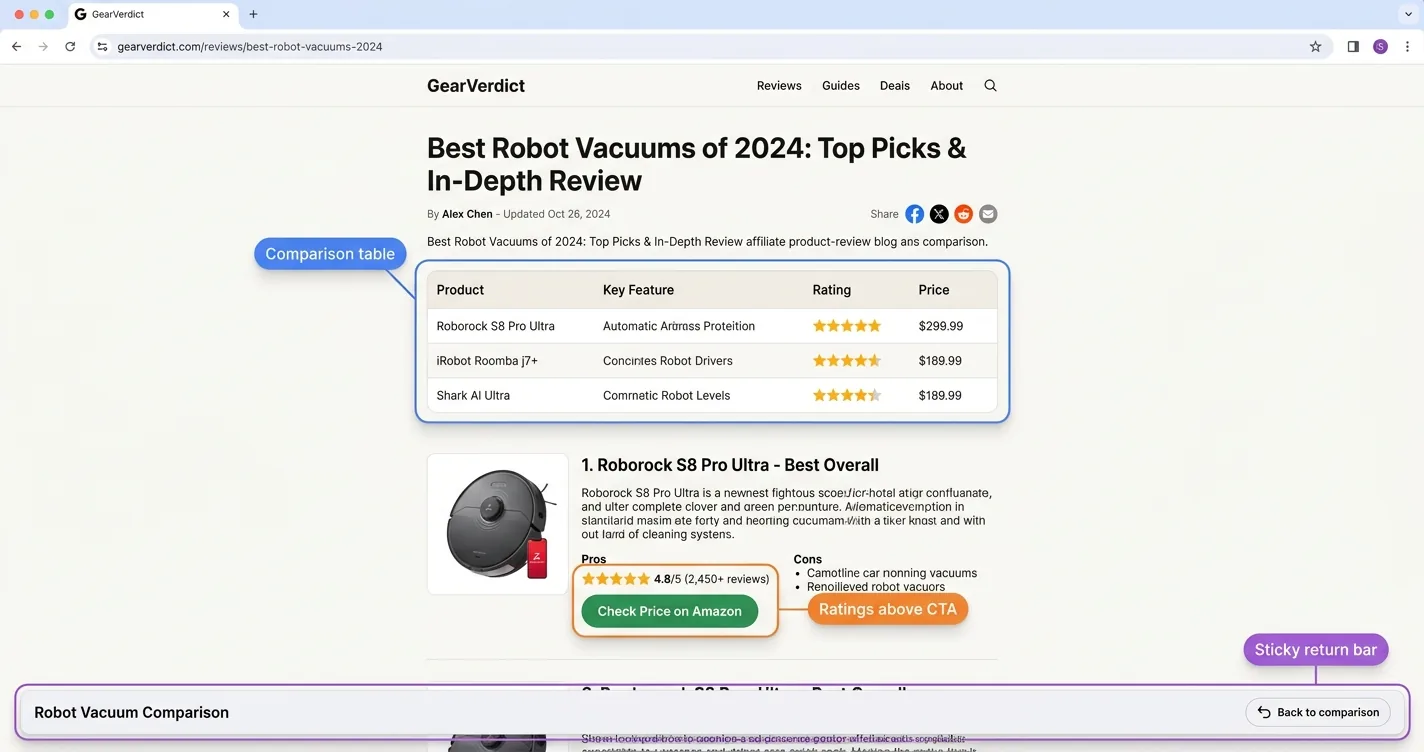
Then pour your effort into those pages instead of spreading it thin across the whole archive. Three changes matter most, and they help the readers who were already close to buying. Scannable comparison tables serve skimmers, and star ratings placed directly above the buy button add proof. A sticky return-to-comparison bar then catches readers who scroll past the pick.
One controlled test by Convertica combined those tweaks and lifted revenue per visitor by 43 percent and orders per visitor by nearly 68 percent, at 99 percent confidence. That is the same traffic earning far more, which is the whole point of this article. Most bloggers skip it because it feels smaller than writing another post, yet it usually pays back faster. The step-by-step version of that work is in our guide to increasing affiliate conversion rate without publishing new posts.
- Rank pages by revenue. Find the few posts that earn most of your affiliate income
- Add a comparison table. Give skimmers a scannable summary near the top
- Move ratings above the CTA. Put star ratings and verdicts right over the buy button
- Add a sticky buy bar. Let scrolled-past readers jump back to the recommendation
- Measure per visitor. Judge each change by revenue per visitor, not raw clicks
Can On-Page AI Chat Monetize Every Conversation?
A blog post captures a reader once, in one direction, and then hopes they click before they leave. An on-page AI assistant turns that same page into a two-way conversation, answering the exact questions your article never got around to covering.
The conversion gap is the reason chat matters, because engaged shoppers who chat tend to convert far better than passive readers do. Forrester research finds that chat users are 2.8 times more likely to convert than those who never engage. Some vendors put chat-engaged conversion near 12 percent against roughly 3 percent for passive browsing, and recommendations matched to what someone actually asks outperform generic links by 25 to 42 percent, though those are vendor-reported figures you should treat as direction rather than a guarantee.
This is exactly what a free widget like ChatAds does on your existing content. Readers ask questions, the assistant answers using your own pages, and it weaves in contextual affiliate links while you keep 100 percent of the commissions. Installation is one script tag, with no coding and no rebuild required.
Drop in one script tag, and readers chat with an AI trained on your own content while ChatAds weaves in contextual affiliate links. You keep 100% of the commissions, with a free tier to test it first. Start free at getchatads.com.
Should You Move From AdSense to a Premium Ad Network?
If you run display ads through AdSense and clear a real traffic base, switching networks is one of the fastest RPM jumps available. Premium networks like Mediavine and Raptive routinely pay several times more for the same impressions than AdSense does.
Mediavine ranges roughly $15 to $40 RPM and Raptive $18 to $50 or more, against typical AdSense figures that sit well below that. The lift comes from header bidding and from high viewability that commands the premium CPMs advertisers actually bid on. In one PubMatic case study, a publisher “has seen a 50% increase in average CPM” (source) after adding header bidding. The same pages and readers then earn more revenue per thousand impressions.
The catch is the entry bar, since Mediavine wants about 50,000 sessions or $5,000 in revenue and Raptive wants 25,000 pageviews.
Once you clear it, network choice becomes a yield decision rather than a traffic decision, and those visitors are worth more without any new traffic. It pairs well with the broader shift in publisher ad revenue heading into 2026.
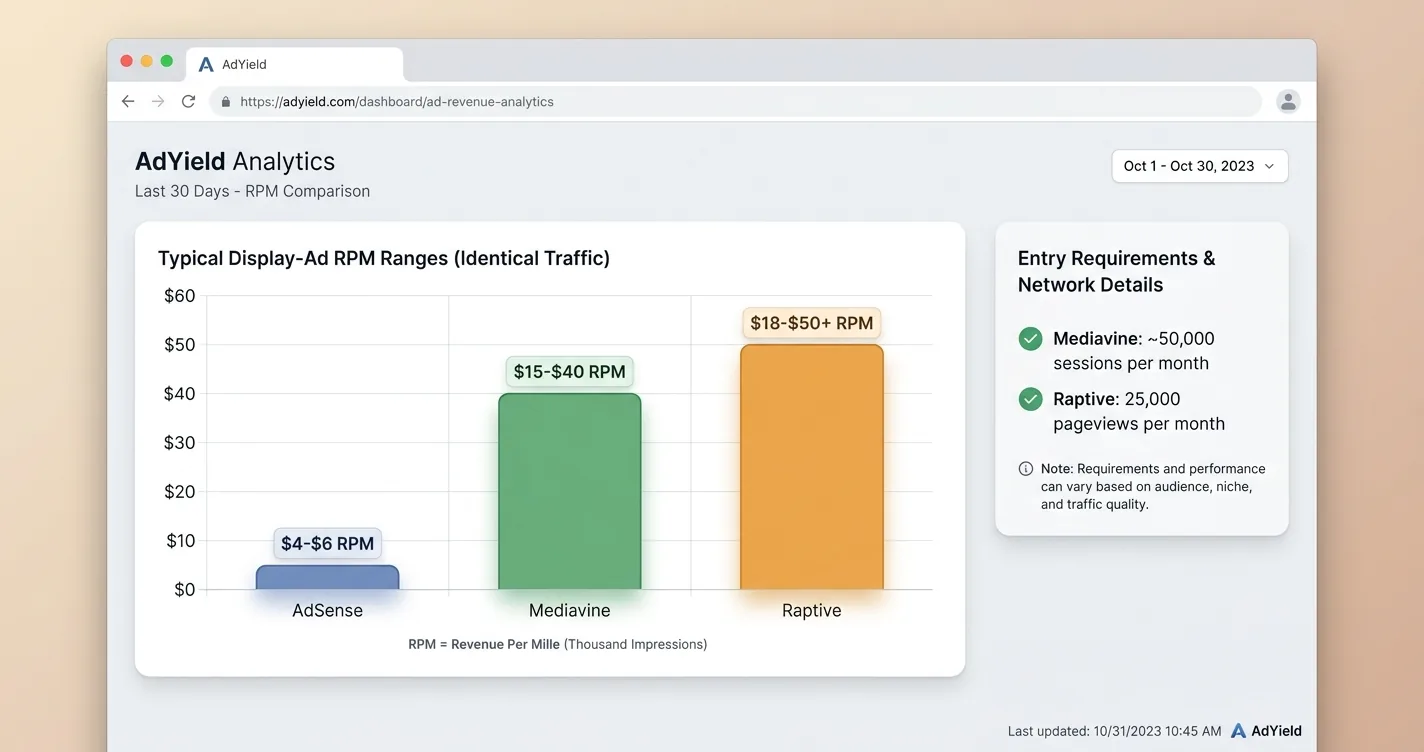
Reported RPM ranges and entry requirements
| Network | Typical RPM | Entry Bar |
|---|---|---|
| AdSense | Low single digits to low teens | None |
| Mediavine | $15–$40 | ~50,000 sessions or $5,000 revenue |
| Raptive | $18–$50+ | 25,000 pageviews |
How Do You Turn One-Time Readers Into an Email List?
Every visitor who leaves without joining your list is someone you have to win back from scratch later. Email flips that math, turning a one-time reader into an audience you can bring back to monetized posts again and again.
Capture works best with contextual opt-ins tied to the post someone is reading, not a generic site-wide popup. A modest list then pays you two ways at once. It drives re-engagement clicks back to your best pages, and it opens newsletter sponsorships as a second income stream from that existing audience.
According to beehiiv, newsletter sponsorship rates run from $15 to $100 or more per thousand by niche, with specialized B2B lists at the top of the range, and one 8,000-subscriber list has earned around $1,848 a month. As beehiiv’s Eric Higgs puts it, even an audience built over years “could be gone in an instant” (source), because a list is an audience that Google cannot quietly take away from you. That stability is worth as much as the direct revenue in a shrinking-traffic year.
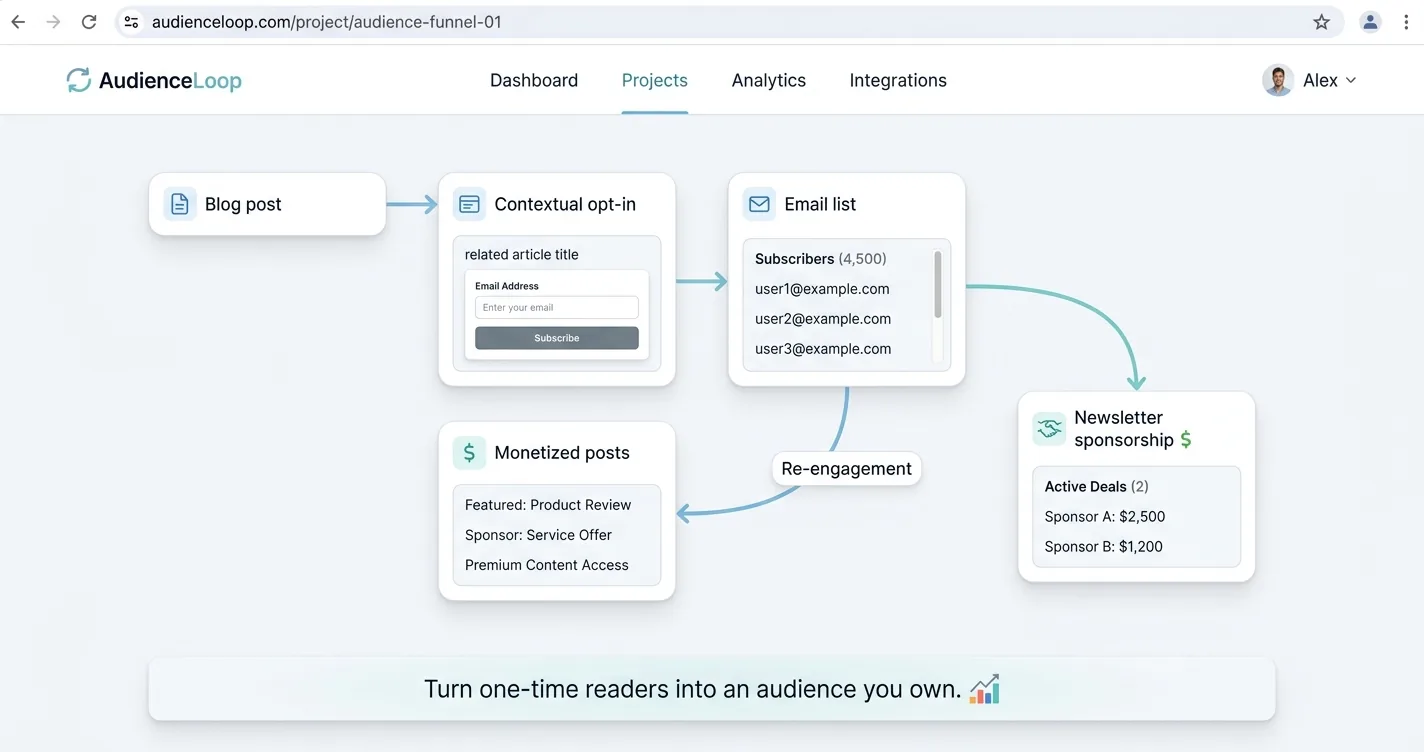
- $15–$100+ CPM for newsletter sponsorships, depending on niche
- $1,848/month earned by one reported 8,000-subscriber list
- Two revenue paths from the same readers: re-engagement clicks and sponsorships
- Owned, not rented so an algorithm change cannot erase the audience overnight
Do Quizzes and Calculators Capture More Leads?
Interactive tools give readers a reason to stay and act, which static paragraphs rarely do on their own. As Outgrow reports, “Interactive content generates 52.6% more involvement than content that doesn’t change” (source), with readers spending near 13 minutes on dynamic content against 8.5 minutes for passive reading.
Those extra minutes turn into lead-capture opportunities when you gate the result behind an email address. A “which product is right for you” quiz or a simple savings calculator can feed the same list you built in the last section. The reader gets a personalized answer, and you get a subscriber who just told you what they want to buy.
Treat these as evergreen assets that keep working long after you publish them, unlike a one-off post that fades. Completion and conversion figures here come from vendors rather than controlled studies, so read them as a direction to test, not a promise. Even a modest lift on a top page compounds every month it stays live.
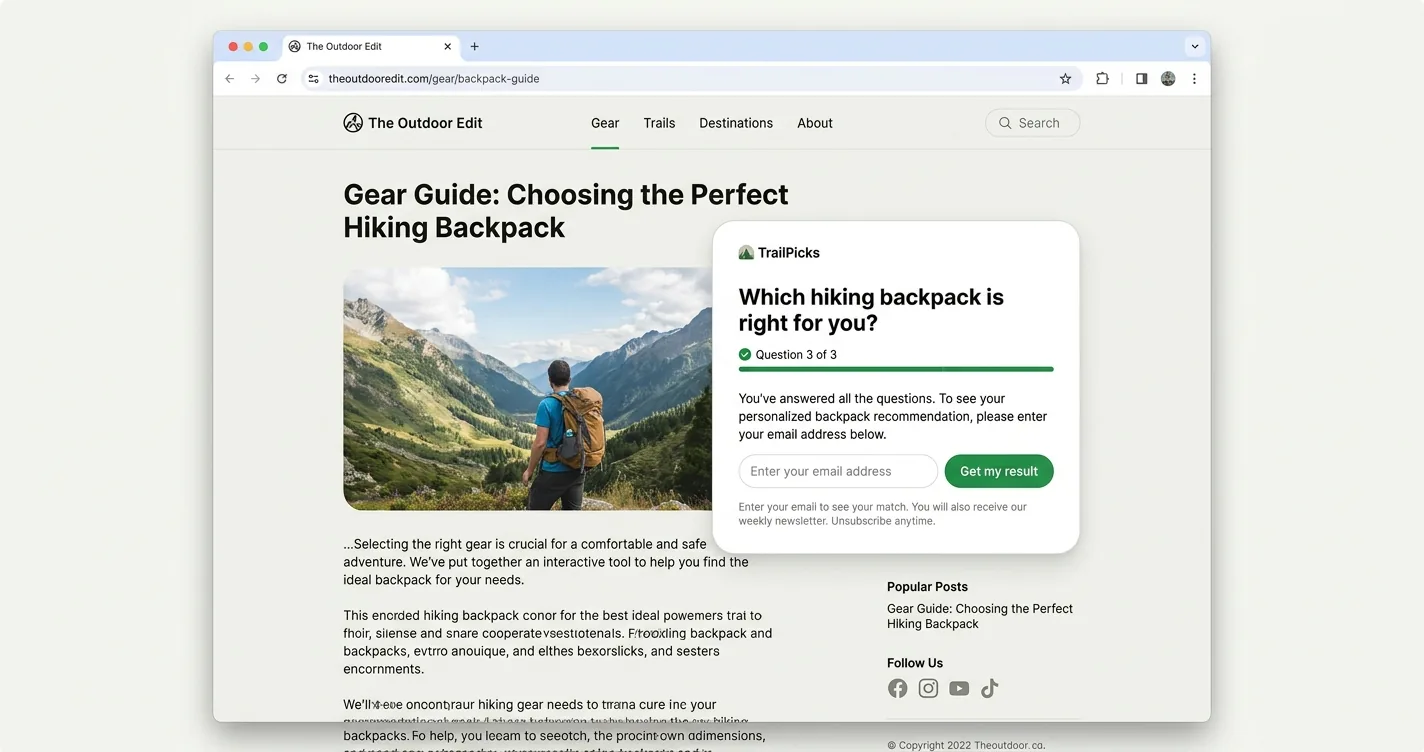
- Product-match quiz. "Which one is right for you?" gated behind an email
- Savings or cost calculator. Reader enters numbers, gets a tailored result
- Sizing or fit tool. Common in apparel, gear, and home niches
- Scorecard or grader. Rates the reader's current setup against a benchmark
How Do Digital Products and Memberships Raise Revenue?
Once your ads, affiliate links, chat, and email are tuned, selling directly is the biggest revenue lever you have left. A small loyal audience can out-earn a much larger passive one, because you keep almost all of the price on every sale.
Digital products like ebooks and courses carry no per-unit cost, so nearly every dollar after production is margin. Recurring memberships at $5 to $20 a month add exclusive content, community, or ad-free reading, and that income holds steady even when your traffic dips for a season.
This is where depth beats breadth, and 10,000 engaged readers can out-earn 200,000 passive pageviews. It works best after the earlier tactics are in place, since a warm and trusting audience is what makes people comfortable buying from you. Traffic swings still hurt, but they stop dictating your entire income.
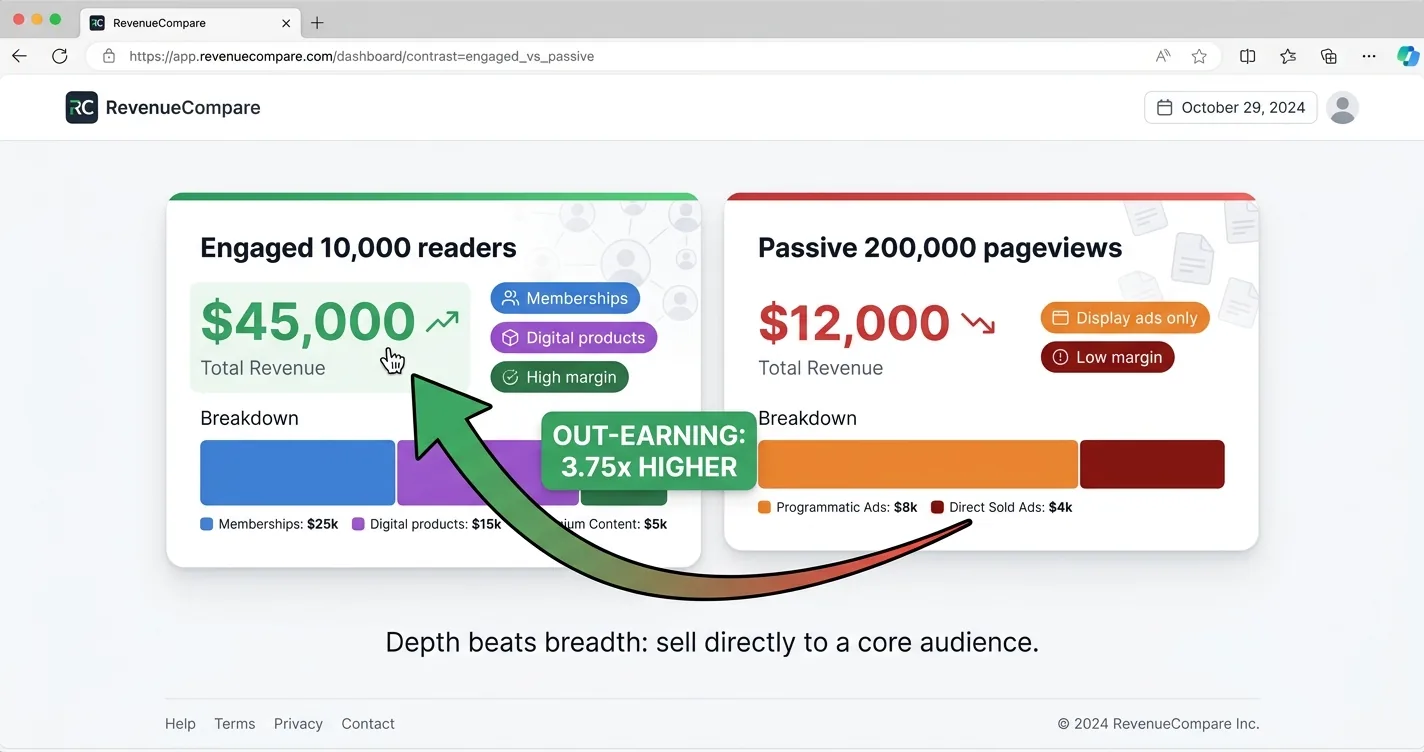
- Ebooks and guides. One-time build, high margin, no per-unit cost
- Courses and workshops. Package expertise you already share for free
- Memberships. $5–$20/month for exclusive content, community, or ad-free reading
- Templates and tools. Downloadable assets tied to your niche
None of these seven tactics require a single extra visitor, and that is the point in a shrinking-traffic year. Each one earns more from the audience already landing on your pages. Some take an afternoon, like moving a rating above the buy button, and some pay off for years, like an email list or a monetized chat widget.
Start with the one or two that fit your blog today, prove the lift on the traffic you already have, and build from there. The blogs that win in 2026 will earn more from every reader they already have, instead of waiting on traffic that stopped showing up.
Frequently Asked Questions
How can you make more money from your blog without more traffic?
Raise revenue per visitor instead of chasing pageviews. Optimize your top affiliate posts for conversion, switch to a premium ad network, capture emails, sell digital products, and add a monetized on-page AI chat widget so each reader is worth more before they leave.
What is the best way to increase blog revenue without more traffic?
Start with your highest-earning 20% of posts, since they carry most of your affiliate income. Adding comparison tables, star ratings above the buy button, and a sticky return-to-comparison bar has lifted revenue per visitor by more than 40% in controlled tests, all on the same traffic.
How do you monetize blog traffic with an AI chat widget?
An on-page assistant answers reader questions using your own content and weaves contextual affiliate links into its replies. A free widget like ChatAds installs with one script tag, needs no coding, and lets you keep 100% of the commissions it earns.
Is switching from AdSense to Mediavine or Raptive worth it?
If you clear the entry bar, yes. Premium networks routinely pay several times AdSense RPM on identical impressions, roughly $15 to $50 versus low single digits, thanks to header bidding and higher viewability. Mediavine wants about 50,000 sessions and Raptive wants 25,000 pageviews.
What is a good revenue per visitor for a blog in 2026?
There is no single benchmark, because it swings widely by niche and monetization mix. The more useful move is to track session RPM or EPMV rather than page RPM, then judge every change by whether affiliate income per visitor goes up rather than by raw pageviews.
Does adding an email list increase affiliate income per visitor?
Yes, because it turns a one-time reader into an audience you can bring back to monetized posts again and again. A modest list also opens newsletter sponsorships, which run roughly $15 to $100 or more per thousand subscribers by niche, as a second income stream from the same readers.