Amazon quietly changed the rules for its Associates program in 2026, and plenty of bloggers felt the drop before they understood it. Some watched their earnings per click slide with no email, no announcement, and no clear reason for the shift. The changes arrived in two separate waves, and each one chips away at a different part of your income.
One wave is an official update to the Operating Agreement that takes effect on April 14, 2026. The other is a set of reported rate card cuts that Amazon never published, first spotted by Adweek and later picked up by other outlets. Together these mark the biggest Amazon affiliate commission changes since the 2020 cuts landed.
The smart response is not to panic or abandon Amazon overnight. It is to understand exactly what changed and stop letting one platform decide your entire income.
- The April 14 Operating Agreement narrows onsite "halo" commission to the same-ASIN purchase only
- Reported rate card cuts of up to 50% hit larger publisher accounts (Adweek)
- The click window stays 24 hours, not the "180-day cookie" many bloggers assume
Ask ChatGPT to summarize the full text automatically.
What Exactly Did Amazon Change in 2026?
Two different rate changes hit the Associates program in 2026, and mixing them up leads to bad decisions. Keeping the two straight is the first step toward responding well.
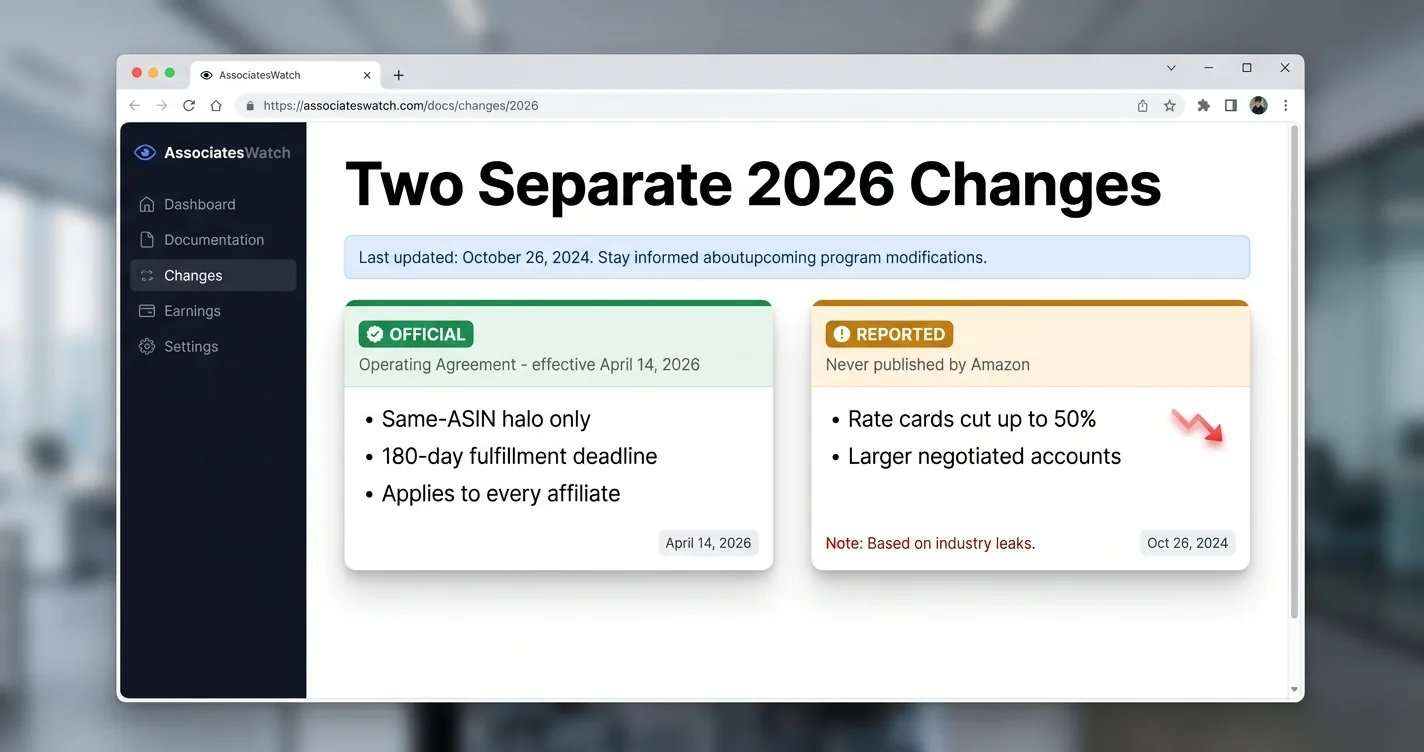
The first change is official, dated, and impossible to argue with. Amazon updated its Associates Operating Agreement with an effective date of April 14, 2026. The change log is blunt: Amazon “Updated calculation of onsite commission income to apply only to Direct Qualifying Purchases of the same ASIN variant as the linked Product detail page.” In plain terms, commission now applies only to the exact product you linked or its variants, so a reader who clicks your kettle link and buys a toaster instead earns you nothing. The same update adds a “180-day time limit requirement that products must be shipped to, streamed or downloaded by, and paid for by the customer to qualify for commission,” tightens the rules on paid-ad traffic, and raises the bar on content originality.
The second change was never published anywhere by Amazon at all. Adweek reported that Amazon cut negotiated rate cards by up to 50 percent for some publishers, with categories that once paid up to 10 percent falling to 4 or 5 percent. eMarketer, Hello Partner, and Shopifreaks all reported the same story. The rollout stayed quiet, starting in APAC in late 2025 and reaching US publishers around March 9, 2026.
One honest detail gets skipped in most of the coverage out there. Amazon’s public Standard Commission Income Statement still shows the old 2020 rates, with Home Improvement at 3 percent and Grocery at 1 percent, so the deepest cuts hit larger accounts with custom deals rather than every small blogger’s default. The Operating Agreement changes, though, apply to everyone in the program.
| Change | Status | Who It Hits |
|---|---|---|
| Operating Agreement update (same-ASIN halo, 180-day deadline) | Official, effective April 14, 2026 | Every affiliate |
| Rate card cuts up to 50% | Reported, never published | Larger negotiated accounts |
How Does the Halo Change Quietly Hurt Every Blogger?
Amazon’s halo commission was one of the best-kept perks of the program, and most bloggers rarely thought about it. It steadily padded your earnings on almost every click you ever sent.
Under the old rules, you earned commission on nearly anything your referred reader bought during that session, not only the product you linked. Send someone to a $30 kettle, watch them add a $200 espresso machine to the cart, and you earn on both items. That upside stayed completely invisible, and you never had to do a thing to capture it.
The April 14 update brings that perk to an end. Commission now applies to the same ASIN or its direct variants only, nothing more. The kettle link earns on the kettle, and the rest of that cart no longer counts for you. Your effective earnings per click can fall even when your headline commission rate never moved an inch.
The halo change hits small publishers just as hard as the big negotiated accounts. A blogger whose default rate card stayed flat can still watch real income drop, because the halo was doing quiet work in the background. You cannot spot it anywhere in the rate table, which is exactly why so many people miss it.
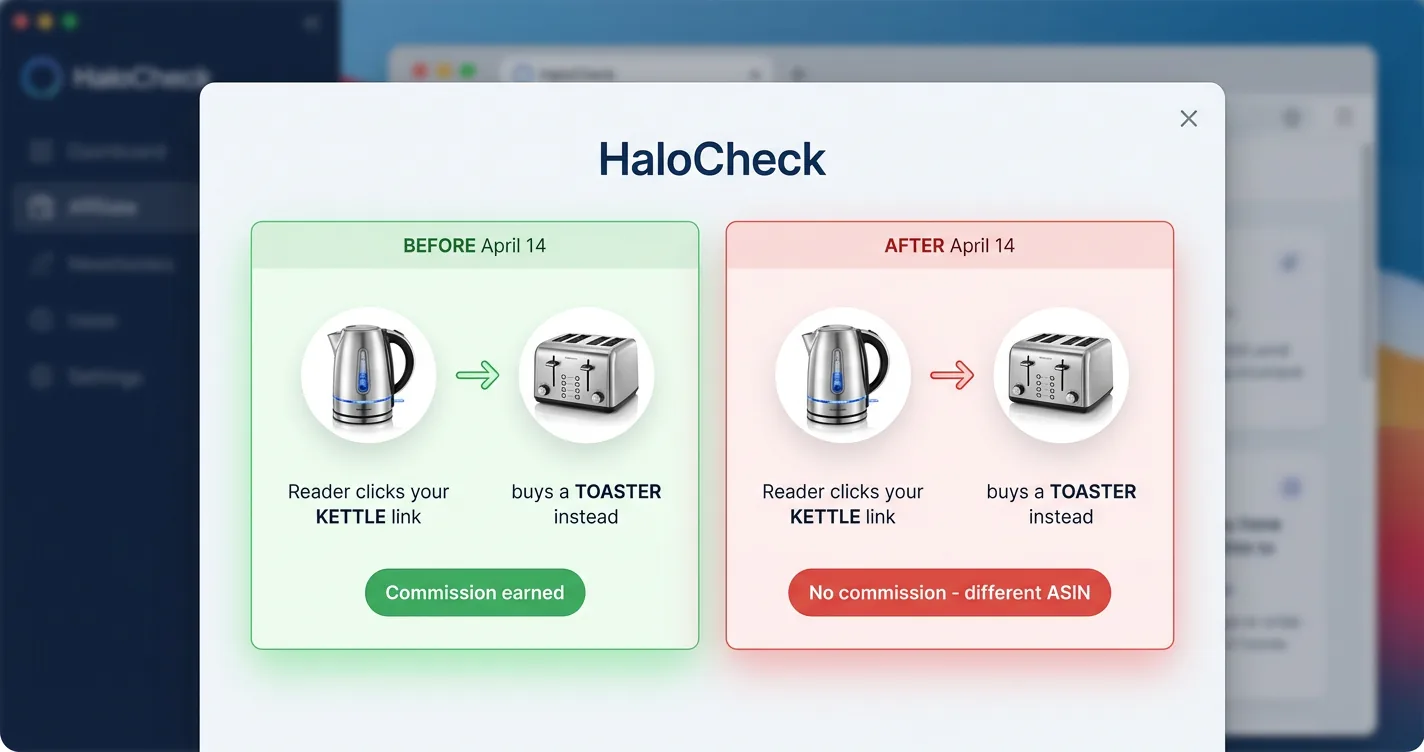
Before April 14, a reader clicking your kettle link and buying a toaster instead still paid you a commission. After April 14, that same click earns you nothing, because the toaster is a different ASIN. The link now only pays on the exact product you sent them to.
Is Amazon’s Cookie Window Actually Getting Shorter?
A rumor spread about a new 180-day cookie at Amazon, and it deserves a quick correction. That 180-day number is not a cookie window at all.
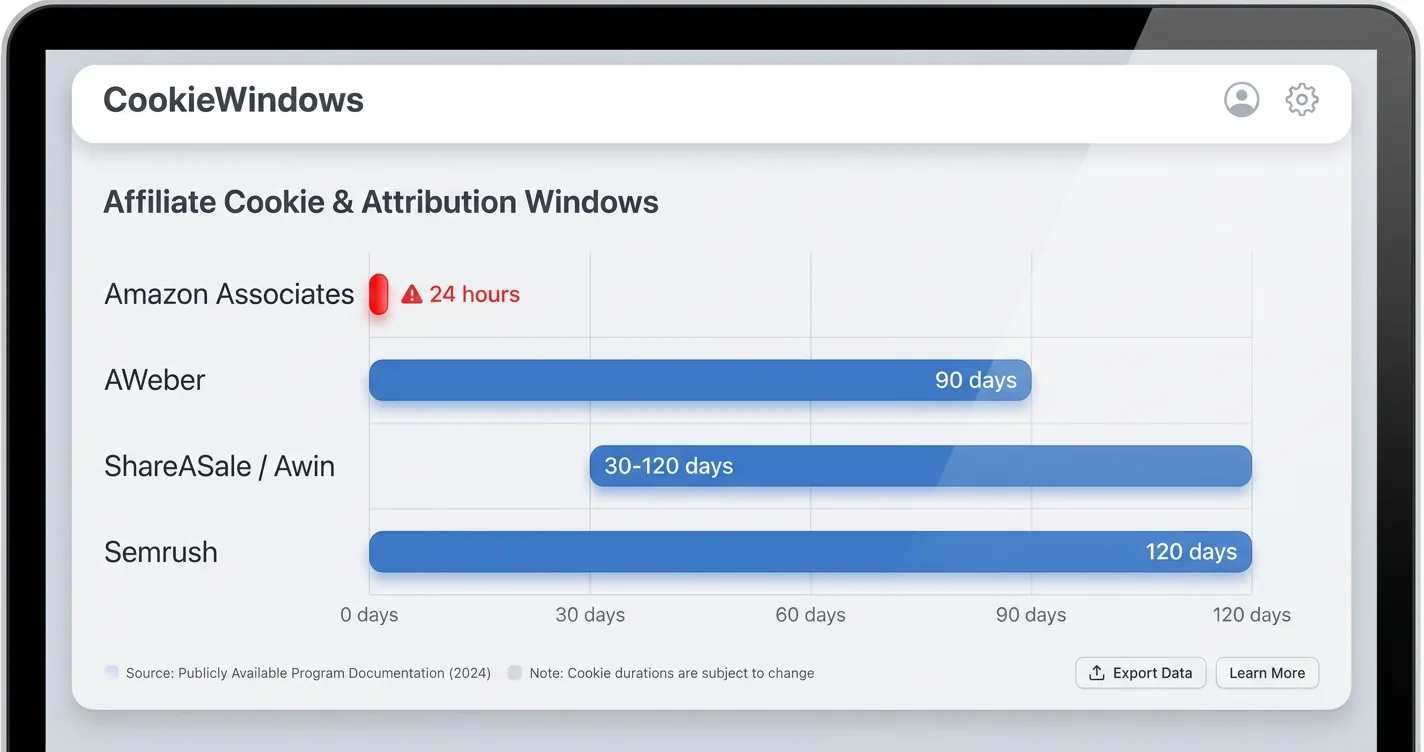
Amazon runs a 24-hour click window plus a 90-day cart carryover, per its own commission tracking rules. If a reader clicks your link and buys within 24 hours, you earn on that purchase. If they add an item to the cart during that window but check out later, the carryover can still pay you for up to 90 days. The new 180-day figure is a fulfillment and payment deadline for the sale to settle, not extra shopping time for readers.
That 24-hour window already caps your earnings on bigger, slower purchases. A reader who compares prices for three days before buying a mattress leaves you with nothing, because the window closed before checkout. Amazon also uses last-click attribution, so a more recent Amazon link from someone else can wipe out your credit entirely.
Compared with other programs, Amazon’s window is unusually tight for high-consideration products. Many networks give you far longer to earn on the exact same reader and purchase. Semrush’s affiliate program, for one, tells partners they “benefit from last-click attribution, 120 days of cookie life,” which is 120 times the length of Amazon’s 24-hour click window. That difference should shape where you send traffic that takes weeks to convert.
Why Is Betting Everything on One Platform the Real Problem?
The 2026 cuts sting, but the deeper issue is not the size of any single cut. It is the dependency that makes every one of these cuts hurt so much.
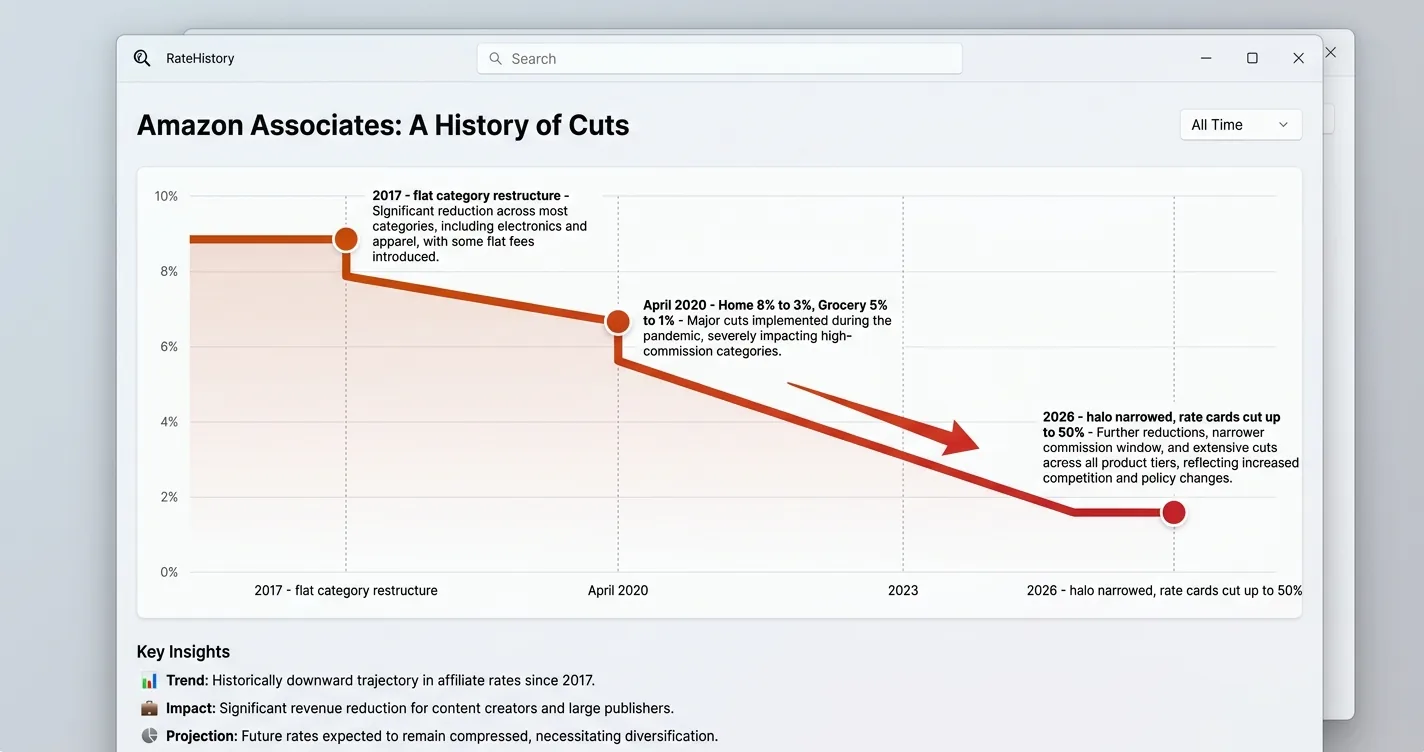
Amazon has trimmed affiliate economics again and again over the past decade. There was a flat restructure in 2017, a steep slash in April 2020 that dropped Home from 8 percent to 3 percent and Grocery from 5 percent to 1 percent, and now the 2026 round. Each move was unilateral, and each one arrived with little or no warning for publishers.
Publishers who built their forecasts around Amazon’s scale paid a heavy price for it. Adweek documented verticals that fell from profitable to break-even after a 50 percent cut, with no way to appeal the decision. When one platform controls your rate, your margin, and your reporting, you are renting a business rather than owning one.
The pattern among the highest-earning bloggers is consistent: they deliberately spread income across owned products and several channels rather than leaning on one network. The lesson here is not to swap Amazon for one single replacement partner. It is to stop letting any one source hold that much control over your revenue.
- 2017: flat category restructure replaces volume-based tiers
- April 2020: Home falls 8% to 3%, Grocery falls 5% to 1%
- 2026: halo narrowed, reported rate cards cut up to 50%
Where Can Bloggers Recover the Lost Revenue?
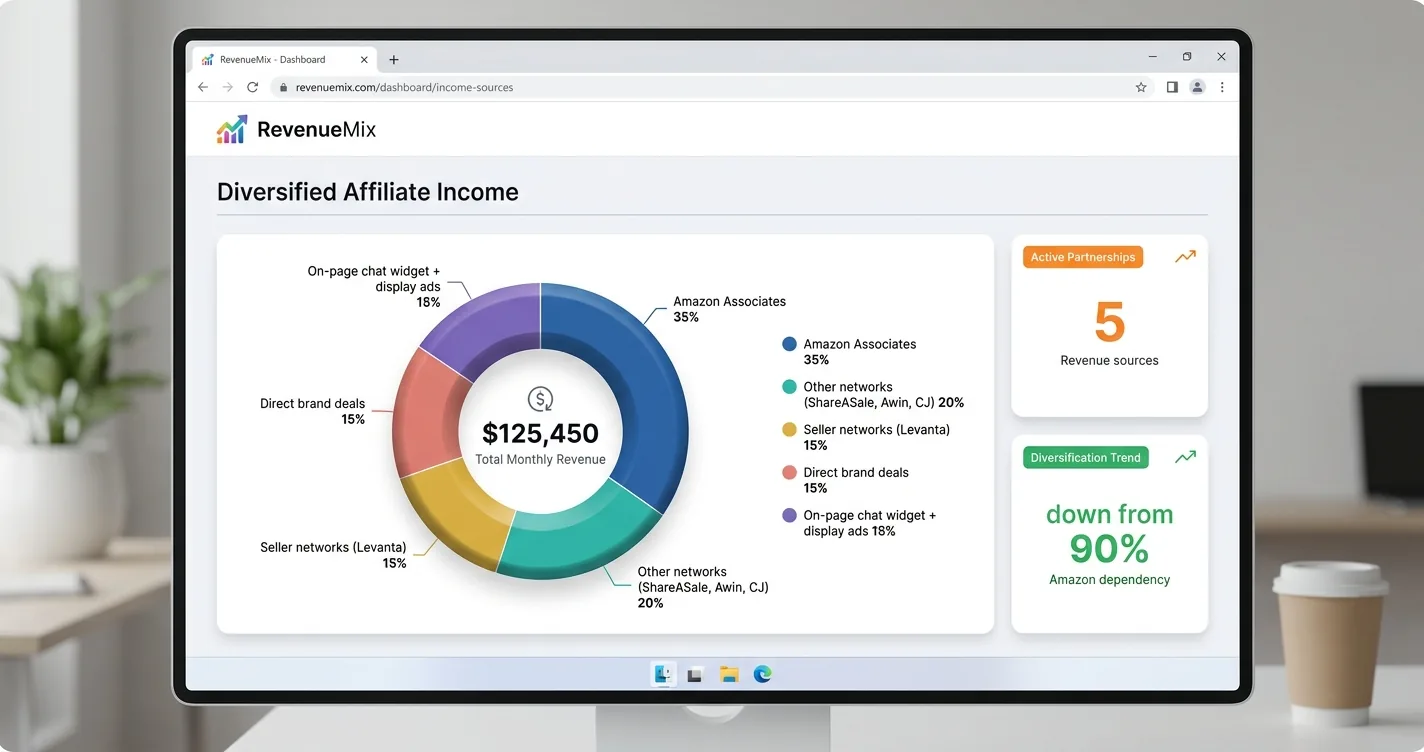
Diversifying your affiliate income starts with spreading revenue across more than one source. No single channel needs to fully replace Amazon right away.
Other affiliate networks are the obvious first move for most bloggers. ShareASale, Awin, and CJ Affiliate list thousands of merchants between them, and many offer longer cookie windows than Amazon’s 24 hours. Seller-focused networks like Levanta connect you directly with brands that sell on Amazon, often paying much higher rates on the very same products you already review.
Direct brand partnerships and multi-retailer choice pages help round out the mix. Instead of sending every reader to one store, a choice page lets them pick a preferred retailer, which lifts conversion and spreads your risk. Beyond affiliate links entirely, display ads and your own digital products add income that never depends on someone else’s commission rate.
The key is layering your revenue, not simply swapping one network for another. Add new income on different pages and moments than your existing reviews, so fresh streams do not cannibalize the affiliate clicks you already earn. The surface with the most room to grow is the one readers actively engage with.
- Other affiliate networks. ShareASale, Awin, and CJ often carry longer cookies than Amazon
- Seller networks. Levanta and peers pay more on the same Amazon products you review
- Direct brand deals. Negotiate rates that no marketplace will ever match
- Multi-retailer choice pages. Let readers pick a store and lift conversion
- Owned income. Display ads and digital products that depend on no one else
For a deeper look at where to start, our roundup of affiliate networks for AI chatbots weighs the strongest options for publishers.
How Does an On-Page Chat Widget Add Revenue Without Touching Your Affiliate Links?
An on-page chat widget answers reader questions right when their buying intent peaks. That moment is a brand new surface, not a rerun of your existing review pages. We cover why this beats writing another post in more depth in our comparison of AI chat versus new posts for affiliate blogs.
This plays out on a real blog in a fairly specific way. A reader lands on your post, opens the assistant, and asks something specific like which blender handles frozen fruit under $100. The AI answers in plain language and weaves a tracked affiliate link straight into the reply. Because that conversation happens in its own space, it can layer on top of your existing links instead of competing for the same click. The fit and compatibility questions that show up on gear review blogs are the clearest version of this.
Online commerce keeps shifting toward conversation, and the numbers show it plainly. Gorgias reports that “AI now handles 31% of customer interactions for ecommerce brands,” and that “93% of AI-influenced purchases happen within the first 48 hours of the conversation.” A short buying window stops being a problem when the recommendation and the click land in the same conversation.
Tools like ChatAds make this a one-line install on your site. You keep 100 percent of your commissions, the widget works out of the box with no training step, and it runs on a surface separate from your reviews. That combination turns a tight buying window into an advantage instead of a liability.
ChatAds is a free embeddable AI chat widget for blogs. Readers ask questions on your page, the assistant answers, and it weaves affiliate links into the conversation while you keep 100 percent of the commissions. It installs with one line of JavaScript and needs no training to start. See our guide on how to turn your affiliate blog into an AI shopping assistant for the full walkthrough.
Amazon’s 2026 changes are real, and pretending otherwise helps no blogger at all. The halo narrowing touches everyone, the reported rate cuts hit larger accounts hardest, and the 24-hour window was always tighter than most people ever realized. None of this means Amazon is worthless to you, but it does mean Amazon should stop being your only plan.
The publishers who come out ahead will treat this moment as a prompt to diversify, not a disaster to merely survive. Spread your income across networks, brands, and formats, then add a surface like on-page chat that earns on top of what you already have. The danger here was never any single cut on its own. It was letting one platform set your rate, your margin, and your reporting all at once. For the wider traffic and revenue picture this fits into, see is affiliate blogging dead in 2026?
Frequently Asked Questions
Did Amazon Associates cut commissions in 2026?
Yes. Two changes hit in 2026: an official Operating Agreement update effective April 14 that limits onsite commission to the same product you linked, and reported rate card cuts of up to 50 percent for larger publisher accounts. The Operating Agreement change applies to every affiliate, while the deepest rate cuts hit negotiated accounts.
What is the Amazon halo commission and what changed in 2026?
The halo commission let you earn on almost anything a referred reader bought in a session, not just the product you linked. As of April 14, 2026, commission applies only to the same ASIN or its direct variants, so a reader who clicks your kettle link and buys a toaster instead now earns you nothing.
Does Amazon Associates have a 180-day cookie?
No. Amazon runs a 24-hour click window plus a 90-day cart carryover, not a 180-day cookie. The new 180-day figure is a fulfillment and payment deadline for a sale to settle, not extra shopping time for your readers.
How much did Amazon cut affiliate commission rates in 2026?
Adweek and other outlets reported negotiated rate card cuts of up to 50 percent for some publishers, with categories that once paid up to 10 percent dropping to 4 or 5 percent. Amazon's public Standard Fee Schedule still shows the old rates, so the deepest cuts hit larger accounts with custom deals rather than every small blogger.
How can bloggers diversify affiliate income beyond Amazon?
Spread revenue across other affiliate networks like ShareASale, Awin, and CJ, seller networks like Levanta, and direct brand deals, then layer on owned income such as display ads and digital products. The goal is to stop letting any single platform control your rate, your margin, and your reporting.
What is the best way to add affiliate revenue to a blog without touching existing links?
An on-page AI chat widget answers reader questions and weaves affiliate links into the conversation, a separate surface from your review pages. Tools like ChatAds install with one line of JavaScript, need no training, and let you keep 100 percent of your commissions.