AI assistants are generating millions of product recommendations every day in 2026, and most developers building those assistants earn nothing from them. A home improvement assistant comparing cordless drill brands, a beauty assistant walking users through skincare routines, a cooking assistant listing ingredients by name. Each of those moments carries purchase intent that could earn a commission with the right infrastructure behind it.
A growing set of affiliate link tools now exists to help AI developers capture that revenue. Some are purpose-built APIs that analyze AI conversation outputs and insert affiliate links automatically. Others are traditional affiliate networks where developers join merchant programs and build their own integration layer to connect those links to assistant responses.
This guide covers the most relevant options for AI assistant developers who want to monetize AI chatbots through affiliate commissions without disrupting the user experience.
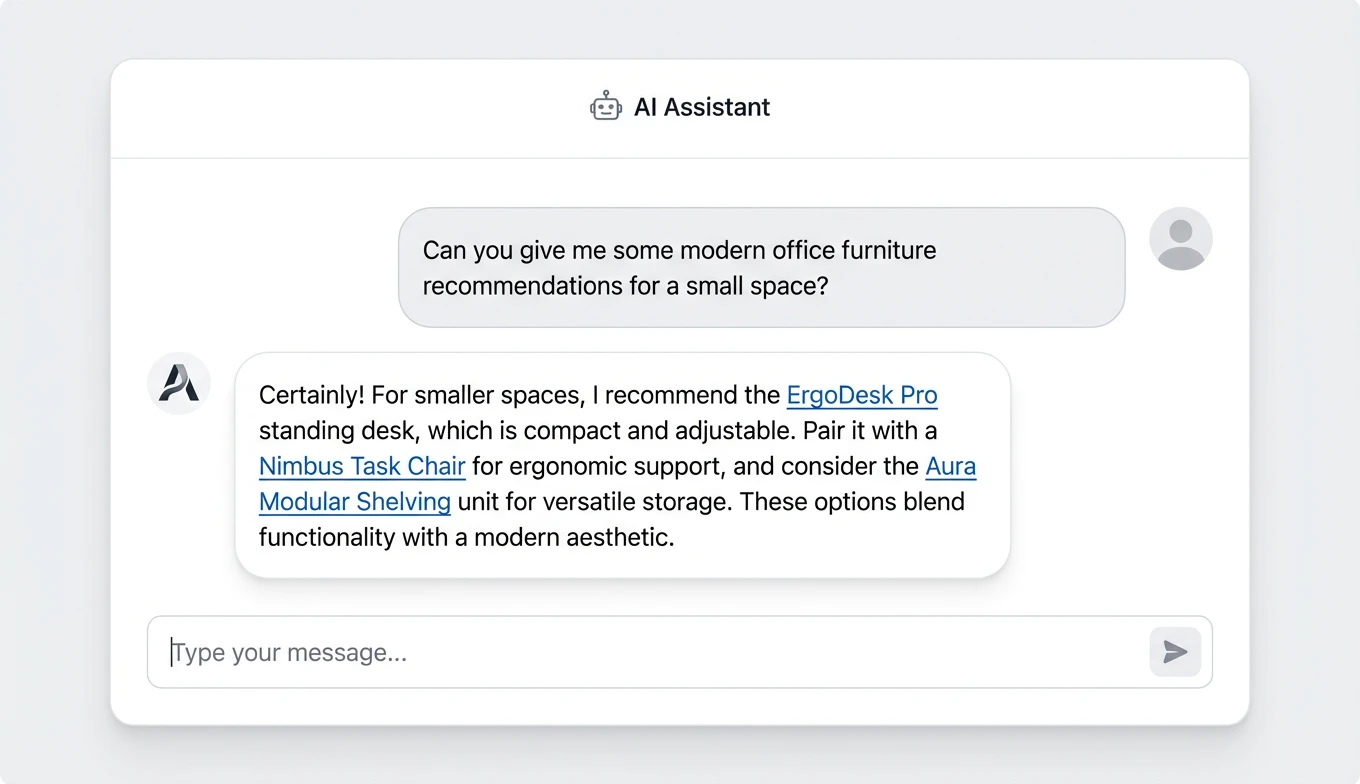
When someone asks an AI assistant for product guidance, they are actively seeking a recommendation, not passively scrolling past an ad. That purchase intent is far more valuable than what display advertising can infer from browsing behavior. A user mid-conversation about which mattress brand to buy is closer to a sale than almost any ad targeting signal could capture. Affiliate links inserted at that moment convert at higher rates because the context is already there, and the recommendation feels helpful rather than promotional.
★ = low · ★★ = medium · ★★★ = high
| Platform | Ease of Use | AI Focus | Cost Value | Network Access |
|---|---|---|---|---|
| ChatAds | ★★★ | ★★★ | ★★ | ★★★ |
| Lasso | ★★★ | ★ | ★★ | ★★ |
| Rakuten Advertising | ★★ | ★ | ★★★ | ★★ |
| Impact | ★ | ★ | ★ | ★★★ |
| PartnerStack | ★★ | ★ | ★★★ | ★★ |
| Refersion | ★★ | ★ | ★★★ | ★★ |
Ask ChatGPT to summarize the full text automatically.
ChatAds

ChatAds is the only tool in this list built specifically for affiliate link insertion in AI assistant conversations. When your assistant produces a response that mentions a product, the ChatAds API reads that output, identifies the purchase intent, and returns a matching affiliate link from your connected accounts before the message reaches the user. The whole round trip runs under 500 milliseconds, which keeps the interaction feeling immediate rather than delayed. A beauty assistant discussing SPF moisturizers, a tech assistant comparing tablet cases, or a pet care assistant recommending food brands will all trigger automatic matching without any manual configuration on the developer’s side.
Five integration methods cover every common AI assistant architecture developers use today. TypeScript and Python SDKs cover most chatbot builds, the REST API handles anything else, and the MCP server is specifically designed for autonomous agents and assistants built on ChatGPT or agent frameworks like LangGraph. That MCP support matters for AI virtual assistant affiliate monetization because autonomous agents often handle multi-turn product conversations where a single interaction might span several exchanges before a recommendation lands. ChatAds handles affiliate links across that full conversation context rather than just single messages. Developers keep 100% of every commission because the pricing model charges per-request rather than taking a revenue share. A free tier at 100 monthly requests gives you room to test the integration before spending anything.
Pros:
- Purpose-built for AI assistant conversations with automatic product mention detection and link insertion
- MCP server supports autonomous agents handling multi-turn product recommendations across long conversations
- 100% affiliate commission retention with no revenue sharing, pay only for API requests
- Sub-500ms response time that fits inside real-time AI assistant interactions without lag
Cons:
- Requires existing affiliate accounts (Amazon Associates, CJ, etc.) before you can start earning
- Currently focused on US market and English-language content
Lasso

Lasso is a WordPress plugin built for affiliate marketers who run product-focused content sites. It sits in a different category from ChatAds because it manages affiliate links inside static blog posts and pages rather than inside AI-generated outputs. For AI assistant developers who also maintain a WordPress site alongside their assistant, something like a product review blog that feeds into or complements the assistant’s recommendations, Lasso handles the static content side well. It creates professional product display boxes, comparison tables, and pros-and-cons layouts that convert better than plain text links. The subscription runs $24 to $29 per month at the entry tier, and you keep all affiliate commissions across any network you join.
For publishers with Amazon-heavy content, the standout feature is automated data integration. Lasso is the only plugin with a direct Amazon Associates API connection that updates product prices, availability, and images across your entire site automatically. A broken Amazon link that would silently kill conversions gets flagged and fixed before it costs you sales. Visit getlasso.co to review the current plan options. The hard boundary here is WordPress. Lasso does not work on custom sites, Vercel deployments, or any other hosting environment. The clear use case distinction for AI developers is: ChatAds for dynamic conversational outputs from the assistant, Lasso for static product content on a WordPress companion site.
Pros:
- Only platform with automated Amazon Associates data integration that keeps prices and availability current
- Conversion-optimized product displays and comparison tables perform better than plain text links
- 100% commission retention with flat monthly subscription pricing across all affiliate networks
Cons:
- WordPress-only, with no support for custom sites or non-WordPress hosting environments
- Monthly subscription cost requires enough affiliate traffic to justify the spend
- Cannot process dynamic AI assistant outputs or conversational product recommendations
- Requires active manual curation of products rather than automatic detection
Rakuten Advertising

Rakuten Advertising is a curated affiliate network backed by the Rakuten Group, a company with over $12 billion in annual revenue. The network focuses on quality over merchant quantity, connecting publishers with roughly 1,000 premium retail and lifestyle brands rather than a sprawling directory of unknown merchants. Walmart, Macy’s, Best Buy, and Sephora are representative of the kind of recognizable names publishers work with through Rakuten. For AI assistant developers, the relevance depends on whether your assistant operates in retail and lifestyle verticals where these brands come up naturally. A fashion AI assistant discussing outfit options, or a home goods assistant comparing furniture and decor, would have strong merchant alignment with Rakuten’s network.
Commission rates range from roughly 2% to 20% depending on the merchant and category, with tiered structures that reward higher-performing affiliates. Rakuten’s flexible attribution options, including first-touch, last-touch, and multi-touch models, mean publishers get credit for their role throughout the customer journey rather than only the final click. The practical note for AI assistant developers is that Rakuten is a traditional affiliate network. Connecting it to an AI assistant means building your own product detection and link insertion layer or pairing it with a tool like ChatAds that handles those mechanics through your Rakuten credentials. For a deeper comparison of networks, see our guide to the best affiliate networks for AI chatbots. You can learn more about the publisher program at rakutenadvertising.com.
Pros:
- Premium retail brand portfolio including Walmart, Macy's, and Sephora with strong consumer recognition
- Flexible attribution models that credit affiliates across multiple touchpoints in the customer journey
- Tiered commission structures reward top-performing publishers with progressively higher rates
- Corporate backing from a $12 billion company ensures reliable payments and long-term stability
Cons:
- No automatic integration with AI assistant outputs, developers must build their own link insertion layer
- Smaller merchant selection than networks like Awin or CJ, with focus narrowed to retail and lifestyle
- Application and approval process with content quality review, not instant publisher access
ChatAds automates the entire affiliate link insertion process at the API level, so developers do not need to identify product mentions, look up affiliate URLs, or configure anything per product. Traditional networks like Rakuten Advertising and Impact give you access to strong merchant relationships, but the integration work falls on the developer. Building your own detection layer and link injection logic is doable, but it takes time that most teams would rather spend on the assistant itself. The two approaches are not mutually exclusive: you can connect your Rakuten or Amazon Associates account to ChatAds and let the API handle the mechanics.
| Platform | Rating | Reviews |
|---|---|---|
| G2 | Not listed | 77 reviews |
| Capterra | Not available | Not available |
Impact

Impact is an enterprise partnership automation platform that reframes affiliate marketing as a broader partnership management operation. Rather than joining a network with a pre-built merchant directory, brands use Impact to build private partner ecosystems with complete control over terms, commission structures, and partner selection. The platform manages over $100 billion in partnership data and provides access to a marketplace of 330,000 vetted partners including affiliates, influencers, and business channel partners. Pricing starts at $500 per month and targets companies doing at least $1 million in annual revenue, which signals clearly that Impact is a brand-side platform.
For AI assistant developers, the relevant context is that you interact with Impact as a partner rather than a customer. If a SaaS brand or large retailer runs its affiliate program through Impact and your AI assistant recommends their products, you would apply to that brand’s program through the Impact marketplace and earn commissions from it. The platform itself is not something most AI developers would subscribe to directly. impact.com is worth bookmarking as a place to find partnership opportunities if your assistant covers categories where enterprise brands run private programs, particularly SaaS, enterprise software, and premium retail. AI-powered partner matching and dynamic commission structures make it one of the more sophisticated options for the programs that do live there.
Pros:
- 330,000 vetted partners in the marketplace with AI-powered matching for brand-partner alignment
- Advanced attribution modeling including multi-touch credit across the full customer journey
- Automated global payments in 70 currencies with fraud prevention for enterprise-scale programs
Cons:
- $500 per month minimum pricing targets brands managing partnerships, not individual publishers
- No pre-built merchant directory for publishers browsing affiliate programs independently
- Requires building your own AI assistant integration layer with no purpose-built AI support
- Better suited to enterprise companies with existing partnership operations than early-stage AI products
PartnerStack

PartnerStack is the dominant platform for B2B SaaS partnerships, built from the ground up around subscription-based commission models rather than one-time product sales. The network connects 600 SaaS companies with 131,000 active partners, and commission structures reflect the higher lifetime value of software customers, typically 15% to 30% recurring on active subscriptions. For AI assistants operating in business and productivity contexts, this is the most relevant affiliate network in the comparison. An AI assistant that helps users evaluate project management software, recommends CRM tools, or guides developers through choosing a cloud platform would find strong program options on PartnerStack.
The recurring commission model is what separates PartnerStack from everything else on this list. A single successful referral to a SaaS product can generate commissions every month as long as that customer stays subscribed. PartnerStack’s billing integrations with Stripe and Chargebee ensure those renewals are tracked accurately without manual reconciliation. Partners can join the marketplace and browse programs for free, with brands paying the platform fees. Ratings of 4.7 on G2 and 4.8 on Capterra reflect strong satisfaction among both brands and publishers. The B2B focus is both the strength and the limit: partnerstack.com programs are software-only, so AI assistants outside business productivity contexts will find little here.
Pros:
- Recurring commission model earns ongoing revenue as referred customers renew subscriptions monthly
- High commission rates of 15% to 30% reflect the greater lifetime value of B2B SaaS customers
- Billing integrations with Stripe and Chargebee track renewals and expansions automatically
Cons:
- B2B SaaS-only focus makes it irrelevant for AI assistants outside business productivity verticals
- Longer B2B sales cycles mean more time between a recommendation and an earned commission
- Brand-by-brand application process with no instant access to all programs in the marketplace
| Platform | Rating | Reviews |
|---|---|---|
| G2 | 4.7/5 | Multiple reviews |
| Capterra | 4.8/5 | Multiple reviews |
Refersion
Refersion is an affiliate tracking and management platform built for eCommerce brands running their own affiliate programs on Shopify, BigCommerce, and WooCommerce. Over 60,000 direct-to-consumer brands use the platform, including names like Amika, ColourPop, Osea, and Recess. From the publisher side, Refersion provides a marketplace where influencers and content creators can browse these brand programs and apply to the ones that fit their audience. Joining the marketplace and applying to programs costs nothing for publishers. Brands pay the subscription fees, which start at $39 per month for their side of the platform.
For AI assistant developers, Refersion opens access to DTC brands that do not always appear in traditional affiliate networks. A wellness AI assistant that discusses skincare and supplements, or a fitness assistant that recommends apparel and gear, would find relevant program options among Refersion’s DTC ecosystem. First-party tracking is a practical advantage as cookie-based attribution becomes less reliable across browsers. Refersion requires individual brand applications rather than one-time network signup, and payment schedules vary across brands. There is also no purpose-built bridge between Refersion programs and AI assistant outputs, so you would need to generate affiliate links through each brand’s portal and manage the how to add affiliate links to AI assistant responses implementation yourself or through a tool like ChatAds. Visit refersion.com to browse the current marketplace.
Pros:
- 60,000 eCommerce brands including DTC companies not typically available on traditional affiliate networks
- First-party tracking maintains attribution accuracy as third-party cookies continue disappearing
- Free for publishers, with brands paying the platform subscription fees
Cons:
- Individual brand applications required with varying approval timelines and payment schedules
- No built-in integration with AI assistant outputs, link insertion must be handled separately
- Narrowly focused on eCommerce and lifestyle verticals, limiting relevance for other AI assistant types
Platforms like Refersion and PartnerStack connect you to brands that run their own affiliate programs rather than participating in large networks. The commission rates tend to be higher because you are working directly with the brand, but the tradeoff is managing multiple individual relationships instead of one network login. For AI assistants that cover niche verticals like clean beauty or premium fitness gear, these direct brand programs often outperform generic network matches on conversion rate and average order value.
How to Choose the Right Affiliate Link Tool for Your AI Assistant
The best starting point is what your AI assistant actually talks about and how the responses are generated. Assistants that produce dynamic, conversational product recommendations need a tool that works on AI outputs in real time. Static content platforms designed for blog pages will not process generated text before it reaches the user. Assistants operating in B2B contexts have different network needs than consumer lifestyle assistants, and the commission structures vary significantly across those categories.
- If your AI assistant recommends products in conversations, start with ChatAds
- If you run a WordPress product site alongside your AI assistant, add Lasso
- If your assistant recommends premium retail brands, explore Rakuten Advertising
- If your AI assistant suggests B2B SaaS tools, consider PartnerStack
For most AI assistant developers, the practical path is connecting one or more affiliate networks to a purpose-built insertion layer. ChatAds accepts your existing Amazon Associates, CJ, or other affiliate credentials and handles the detection and insertion automatically. Monetizing AI chatbots through affiliate commissions does not require building a custom pipeline from scratch when the infrastructure already exists for it.
Most AI assistants that mention products during conversations should start with ChatAds for affiliate link insertion, since it handles detection and matching automatically with 100% commission retention. Pair it with a traditional network like Rakuten or PartnerStack depending on your assistant's vertical to expand the affiliate programs your credentials can draw from.
Frequently Asked Questions
What are the best affiliate link tools for AI assistants?
ChatAds is the strongest option for AI assistants that generate product recommendations because it detects mentions in real time and inserts affiliate links automatically with 100% commission retention. For affiliate network access, the right choice depends on your assistant's vertical: Rakuten Advertising for retail and lifestyle brands, PartnerStack for B2B SaaS recommendations, and Refersion for DTC eCommerce partnerships. Lasso complements AI assistant monetization for developers who also run a WordPress product site.
How do you insert affiliate links into AI assistant responses?
The cleanest approach is using the ChatAds API or SDK, which reads your AI assistant's response, detects product mentions using keyword extraction and intent classification, and returns affiliate links from your connected accounts. The insertion happens in under 500 milliseconds so the user experience stays intact. You can also manually generate affiliate links from any network and inject them into your assistant's response logic, though that requires you to handle detection and matching yourself.
Which affiliate platform lets AI developers keep the most revenue?
ChatAds offers 100% commission retention for affiliate link insertion in AI assistants because it charges per-request API fees rather than taking a percentage of earnings. All affiliate commissions flow directly to your connected network accounts. Traditional affiliate networks like Rakuten Advertising and PartnerStack also pay publishers the full commission set by each merchant program, though those networks require you to handle the AI integration layer yourself.
Do affiliate link insertion tools work with all AI models?
ChatAds operates on the response layer rather than inside the model, so it works with any AI assistant regardless of the underlying LLM. The REST API accepts text from any provider, and the TypeScript, Python, and MCP SDKs cover the most common assistant architectures including OpenAI, Anthropic, and open-source models. Because the tool processes the completed response rather than intercepting the model's inference, there is no model-specific integration required.
What types of AI assistants earn the most from affiliate links?
AI assistants with strong purchase intent in their conversations earn the most from affiliate link insertion. Shopping assistants, home improvement advisors, beauty and skincare guides, fitness coaches recommending gear or supplements, and product comparison tools all generate high-value affiliate moments. B2B assistants that recommend software tools can earn substantial recurring commissions through programs on PartnerStack, where software referrals pay 15% to 30% on subscription renewals.
Can you monetize a free AI assistant without subscriptions?
Affiliate link insertion gives AI assistant developers a revenue path that does not require users to pay. ChatAds automatically inserts affiliate links into product recommendations within your assistant's responses, earning commissions when users follow those links and make purchases. The assistant stays free for users while generating income from relevant product placements. This approach works well as a complement to a freemium model or as the primary monetization strategy for consumer-facing assistants with high conversation volume.