AI coding assistants are burning through inference budgets in 2026 with almost nothing coming back in. Developers building IDE copilots, autonomous debugging agents, and code review tools face a specific version of this problem: GPU-heavy inference for code generation costs far more per query than a general chatbot, yet the tools are expected to be free or nearly free to attract adoption. Subscriptions help, but only a fraction of developers pay.
Ad monetization offers a different path for AI coding assistant developers. When your assistant walks a developer through setting up a CI/CD pipeline, recommends a testing framework, or explains which cloud provider handles a specific deployment pattern, those moments carry real purchase intent for SaaS products, developer tools, and learning platforms. That intent can turn into affiliate commissions or display ad revenue with the right infrastructure, and it does so without adding paywalls that push developers away.
This guide compares seven platforms for monetizing AI coding assistants. Coverage spans embedded affiliate links that surface when a copilot names a tool, display ad networks that earn from impressions across coding sessions, and reasoning-time advertising that weaves sponsored context into the generation process. The focus throughout is what matters for coding tools: response latency, relevance to developer and SaaS products, and formats that do not disrupt the coding workflow.
When a developer asks a coding assistant which testing framework to use, they are not browsing casually. They are evaluating options and close to making a decision. That purchase intent for SaaS tools, cloud services, and developer platforms converts better than what generic display advertising can infer from browsing behavior. A copilot recommending a deployment service to a developer actively setting up infrastructure carries more commercial value per interaction than almost any other ad targeting signal available in 2026.
★ = low · ★★ = medium · ★★★ = high
| Platform | Ease of Use | AI Focus | Cost Value | Dev Tool Relevance |
|---|---|---|---|---|
| ChatAds | ★★★ | ★★★ | ★★ | ★★★ |
| ZeroClick | ★ | ★★★ | ★★ | ★★ |
| Koah Labs | ★★ | ★★★ | ★ | ★★ |
| Adgentic | ★★ | ★★ | ★★ | ★★ |
| AdChats | ★★ | ★★ | ★★ | ★ |
| Adsbind | ★★ | ★★ | ★★★ | ★ |
| Jutera | ★ | ★★ | ★★ | ★ |
Ask ChatGPT to summarize the full text automatically.
ChatAds

ChatAds is the only platform in this comparison built specifically for affiliate link insertion inside AI conversation outputs. For coding assistants, the workflow looks like this: your copilot generates a response that mentions a testing framework, a CI/CD service, or a cloud platform, and the ChatAds API reads that output, detects the product mention, and returns an affiliate link from your connected accounts before the message reaches the developer. The round trip runs under 200 milliseconds, which means code explanations and tool recommendations reach the IDE at full speed without noticeable lag. No manual configuration is needed for individual products. Detection is automatic across whatever your assistant discusses.
Five integration methods cover every common coding assistant architecture developers build today. TypeScript and Python SDKs handle the majority of copilot builds, the REST API works for any language or custom setup, and the MCP server connects directly to autonomous coding agents built on agent frameworks like LangGraph. That MCP support matters for autonomous debugging tools and multi-step code review agents, where a single session might involve several exchanges before a specific tool recommendation lands.
Coding assistants using that integration path handle affiliate links across the full session context rather than treating each message independently. Eight ad formats span inline text links on tool names to product cards for comparison flows. Developers keep 100% of every affiliate commission because the pricing model charges per API request rather than taking a revenue share, and a free tier at 100 monthly requests lets you test against real coding sessions before spending anything.
Pros:
- 100% affiliate commission retention, pay only per-request API fees
- MCP server connects directly to coding agents and autonomous debugging tools
- Sub-200ms response time won't slow down code suggestions or IDE interactions
- Free tier at 100 monthly requests for testing before spending anything
Cons:
- Requires existing affiliate accounts (Amazon Associates, CJ, etc.) before earning
- Currently focused on US market and English-language content
ZeroClick

ZeroClick takes a fundamentally different approach to monetization than every other platform on this list. Rather than analyzing a finished response, the platform evaluates advertiser context during the model’s reasoning process itself. For a coding assistant, that means the model could consider a sponsored cloud provider or deployment service while it is generating a response about infrastructure setup, producing a recommendation that includes the advertiser organically rather than appending a link after the fact. Founded by Ryan Hudson, who built Honey into a $4 billion PayPal acquisition, ZeroClick raised $55 million in September 2025 from the same investor group behind that exit. The advertiser network already includes over 10,000 brands, with major tech retailers like Best Buy and Samsung represented alongside consumer names.
The September 2025 acquisition of Sleek, a YC-backed shopping and browser monetization platform, extends the network further into transactional contexts that could include developer tool purchases and SaaS subscriptions. The main challenge for coding assistant developers evaluating ZeroClick is actually getting access to it. The platform operates in closed beta with no public documentation, API reference, or pricing. The reasoning-time approach also requires inference-level access to the model generating responses, which rules out coding assistants built on third-party LLM APIs like OpenAI or Anthropic, where developers cannot inject context into the generation loop. Teams building fully custom inference stacks are better positioned to evaluate this, but that is a small fraction of coding assistant developers in 2026.
Post-processing platforms like ChatAds analyze the finished code suggestion or response and attach affiliate links to detected tool mentions. The coding assistant's output stays unchanged. Reasoning-time platforms like ZeroClick inject advertiser context before the response is generated, producing tighter ad relevance but requiring deep access to the inference layer. For coding assistants built on third-party LLMs like GPT-4 or Claude, post-processing works immediately with any provider. Reasoning-time approaches need platform-level access that most coding tool developers do not have.
Pros:
- 10,000+ advertisers including tech brands like Best Buy and Samsung
- $55 million funding from investors behind a proven $4 billion consumer exit
- AI model evaluates ad relevance during reasoning rather than forcing placements
Cons:
- Closed beta with no public documentation or pricing for coding assistant developers
- Requires inference-level access incompatible with coding tools built on third-party LLMs
- Deeper integration complexity than post-processing approaches most developers prefer
Koah Labs

Display advertising for AI applications has a dedicated infrastructure in Koah Labs, which markets itself as the AdSense equivalent for generative AI products. The platform’s SDK analyzes both the developer’s input and the assistant’s response, then returns contextually matched ads from a curated advertiser network. For coding tools, that context analysis could surface ads for cloud platforms when a developer is setting up infrastructure, or SaaS monitoring tools when a debugging session is in progress. Verified production clients include Luzia, a consumer AI assistant with millions of active users across Latin America and Europe, as well as Liner, Heal, and DeepAI, giving Koah the strongest client proof in this category aside from enterprise-focused platforms.
Koah reports a $10 average eCPM and a 7.5% click-through rate, claiming performance four to five times above traditional mobile ad networks. The platform distributes revenue across three models simultaneously: CPC, CPM, and affiliate CPA, optimized automatically without developer configuration. A $5 million seed round from Forerunner Ventures and AppLovin co-founder Andrew Karam funds the operation. Cross-platform SDK coverage spans JavaScript, React, React Native, Flutter, iOS, and Android, which matters for coding assistants that ship across IDE extensions and mobile developer tools. The trade-offs are real, however. Revenue share percentage is not published anywhere, custom pricing requires a direct partnership conversation rather than self-serve signup, and the platform has operated for less than one year since its September 2025 launch.
Pros:
- Verified production clients including Luzia (millions of users) and Liner provide real proof
- Multiple revenue models (CPC, CPM, CPA) optimized automatically for maximum earnings
- Cross-platform SDK covering JavaScript, React Native, Flutter, iOS, and Android
Cons:
- Revenue share percentage not published, making take-home earnings hard to calculate
- Custom pricing requires partnership discussions rather than self-serve signup
- Less than one year of operational history since launching September 2025
Adgentic

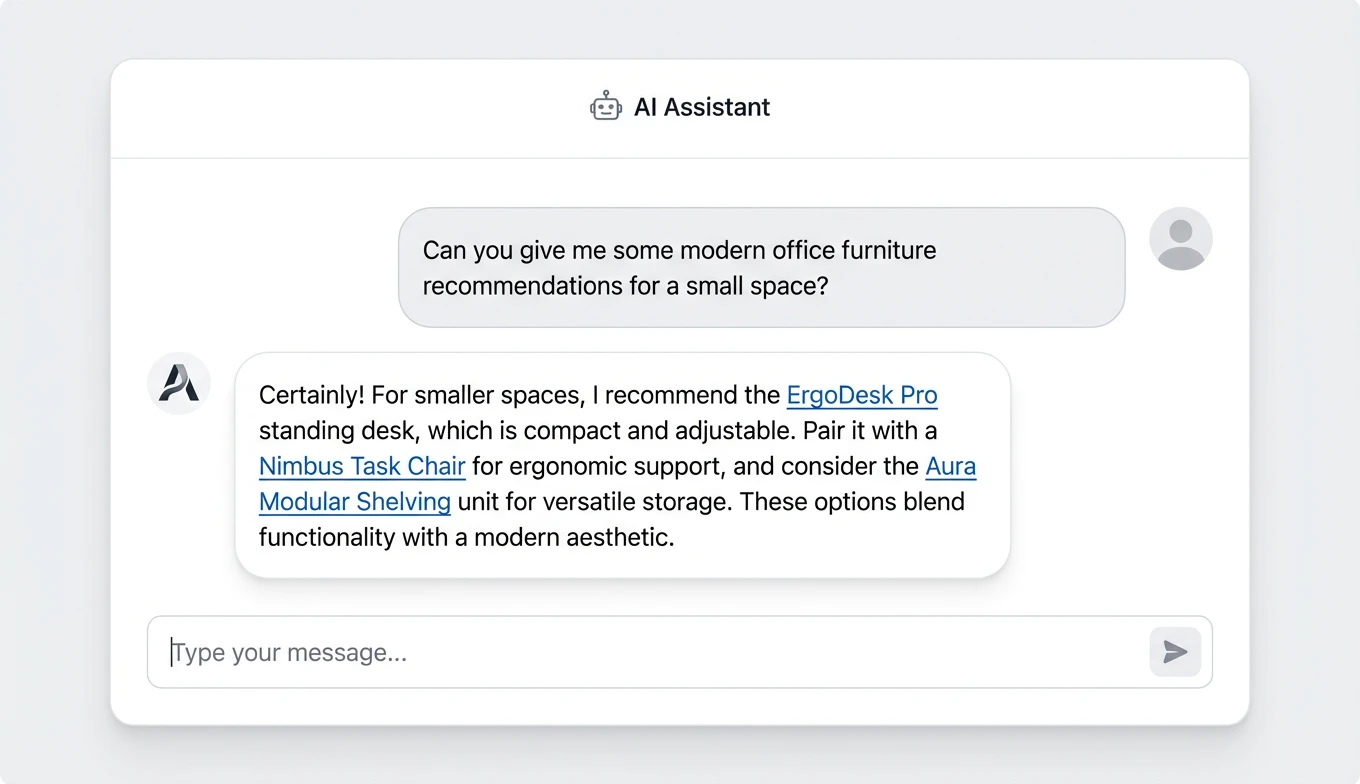
Managing affiliate network accounts across CJ, AWIN, Partnerize, and Impact simultaneously is operational overhead that most coding assistant developers do not want. Adgentic addresses this by providing a single API that replaces managing those four networks independently. Coding assistants connect once and gain access to an LLM-optimized product catalog with millions of SKUs, geo-aware deep links that adjust based on the developer’s location, and automatic attribution routing across the connected networks. For a coding assistant that recommends SaaS tools, IDE extensions, or cloud services, Adgentic handles the network complexity that would otherwise require a dedicated affiliate operations function.
The MCP server integration is the most relevant feature for autonomous coding agents. Coding assistants and debugging agents built on agent frameworks can surface developer tool recommendations through Adgentic’s catalog without manual link management. The platform functions well for coding assistants with e-commerce or SaaS product recommendation flows where developers ask about specific tools and expect direct product links in response. What is missing is any public evidence of how it performs in practice: no published pricing, no disclosed revenue share terms, and zero named clients or case studies as of March 2026. Adgentic likely takes a commission percentage on earnings, which reduces take-home compared to running direct affiliate accounts through a tool like ChatAds that charges per request instead.
Pros:
- Single integration replaces managing four separate affiliate networks
- MCP server enables autonomous coding agents to surface dev tool recommendations
Cons:
- No public pricing or revenue share terms for coding assistant developers
- Zero published case studies or named clients
- Likely takes a commission percentage, reducing earnings versus direct affiliate accounts
AdChats

Chat-native ad formats designed for conversational interfaces are the core offering from AdChats. The platform’s format set includes within-chat ads that appear inline during a conversation, menu ads that surface in navigation areas, and article ads that map to longer-form response surfaces. For a coding assistant with a sidebar panel or multi-turn debugging interface, those formats translate to inline tool suggestions during a session, sponsored recommendations in a command palette, and contextual ads within extended code explanations. The platform’s real-time bidding API connects coding assistant inventory to programmatic ad demand beyond a closed network, and GPT-generated creative optimization adjusts ad content for conversational contexts automatically.
AdChats reports operating at scale: over 100 publisher partners, 12 million managed chats, and 200 million conversions tracked. Claimed performance benchmarks include 5x CTR and 3x CVR versus traditional ad placements, though no third-party validation of those figures exists. For coding assistant developers who want native ads in AI chats without building custom ad infrastructure, the format variety and programmatic access are genuine advantages. The practical evaluation problem is that AdChats publishes no pricing, no revenue share terms, and several documentation pages return 404 errors, making it impossible to model economics before committing to an integration.
Coding assistants that recommend specific tools by name (a testing framework, a deployment platform, a monitoring service) earn more per interaction through affiliate links because commissions scale with purchase price. Assistants with high conversation volume but fewer direct product mentions earn more consistently through display ad platforms, where steady eCPM accumulates across thousands of coding sessions. The strongest approach for most AI coding assistant monetization strategies combines both: affiliate links on product mentions and display ads on general coding conversations.
Pros:
- Proven scale with 100+ partners and 12 million managed chats
- RTB API provides access to programmatic ad demand beyond a closed network
- Chat-native ad formats designed for conversational interfaces
Cons:
- Pricing and revenue share terms are not available publicly
- Several documentation pages are broken, limiting technical evaluation
- Unverified performance claims lack third-party validation
Adsbind

Developer experience is the clearest differentiator for Adsbind in this comparison. The platform ships a Python SDK installable via pip, claims a five-minute setup time, and puts ad frequency controls in a dashboard rather than code. For a coding assistant developer who wants to ship monetization quickly without writing custom ad integration logic, that frictionless path is appealing. The dashboard controls ad frequency in a range from one ad per five messages to one per two or three, letting developers tune how aggressively the assistant monetizes without touching the codebase. Automated brand safety filtering runs across all ad placements, blocking consumer ads irrelevant to developer contexts and keeping the assistant focused on relevant categories.
Early adopters on the current waitlist receive 75% to 85% revenue share, the highest disclosed rate among all platforms reviewed here. That rate is a meaningful advantage for coding assistant developers trying to offset inference costs during early growth. Those advantages come with significant limitations that are hard to overlook. Adsbind remains waitlist-only with no published timeline for access, and the Python-only SDK excludes coding assistants built in TypeScript, Go, Rust, or other languages common in the developer tooling space. The 75 to 85% share is explicitly an early adopter rate, and post-launch terms are completely unknown. No case studies, client names, or company background information appears anywhere on the site.
Pros:
- 75-85% early adopter revenue share is the highest disclosed rate among these platforms
- Dashboard-controlled ad frequency adjusts monetization without code changes
Cons:
- Waitlist-only access with no guaranteed timeline for coding assistant developers
- Python-only SDK excludes assistants built in TypeScript, Go, or other languages
- Post-launch revenue share unknown and may drop significantly
- No case studies or company background information published
Jutera

Enterprise compliance documentation sets Jutera apart from every other platform in this comparison. The company holds SOC 2 Type II certification alongside GDPR and CCPA compliance, which matters specifically for coding assistants that process proprietary code, internal architecture details, or sensitive infrastructure configurations. Enterprise development teams evaluating whether to adopt an AI coding tool often block on compliance requirements, and a monetization layer with those certifications removes a procurement objection that would otherwise require security review. Jutera caps sponsored content at 20% of responses and requires transparent disclosure on every ad placement, keeping the experience clean for developers who are already wary of ads inside their tooling.
The technical architecture processes ad requests in parallel with AI response generation rather than sequentially, so the monetization layer does not add wait time before a code suggestion appears. Ad formats cover sponsored recommendation cards, contextual links embedded in responses, and in-conversation promotional messages. Multiple revenue models are described, spanning CPC, CPM, affiliate, and sponsored content. The problem is that none of the execution evidence matches the positioning. Several documentation pages on the site are broken, no named clients or case studies exist anywhere, pricing information is not published, and the advertiser network details remain entirely unknown. Jutera may be the right enterprise answer if it ships, but nothing public confirms that the product is operational.
Pros:
- SOC 2 Type II, GDPR, and CCPA certifications matter for coding tools handling proprietary code
- Parallel ad processing avoids adding latency to code suggestion response times
Cons:
- Zero named clients or case studies of any kind
- Key documentation pages are broken, suggesting an incomplete or pre-launch product
- No public pricing or advertiser network information
- Unknown whether platform is operational or still in development
How to Choose the Right Ad Monetization Platform for Your AI Coding Assistant
Choosing the right platform starts with your coding assistant’s technical architecture. Assistants built on third-party LLM APIs (OpenAI, Anthropic, Gemini) cannot use reasoning-time platforms like ZeroClick, which require inference-level access. That immediately narrows the practical field to post-processing affiliate platforms, display ad networks, and managed affiliate aggregators. From there, user base size and monetization goals separate the options. A coding assistant at early scale with a focused technical audience earns more from affiliate links on specific tool mentions than from display impressions spread thin across low-traffic sessions. A mature copilot with thousands of daily active developers benefits from both approaches running together.
Response latency is non-negotiable for any developer-facing coding tool. A code suggestion that pauses for 800 milliseconds while an ad request resolves breaks the IDE experience faster than any subscription paywall would. Relevance matters nearly as much: developer audiences dismiss consumer ads quickly, and an assistant that surfaces irrelevant product placements loses trust that is hard to rebuild. Inline affiliate links on tool recommendations and contextually matched developer-focused ads keep the experience coherent. For a step-by-step walkthrough, see how to add affiliate links to AI assistant responses. For a broader look at how to monetize AI chatbots across revenue models, see the linked overview.
- If your coding assistant recommends specific dev tools, start with ChatAds
- If you need display ads at scale across coding sessions, evaluate Koah Labs
- If you want managed affiliate without running network accounts, explore Adgentic
- If you need enterprise compliance for regulated environments, watch Jutera
Most coding assistants that mention dev tools during conversations should start with ChatAds for affiliate monetization, since it handles detection and matching automatically with 100% commission retention and sub-200ms response times that keep IDE interactions fast. Pair it with Koah Labs for display revenue on high-volume coding sessions to cover both monetization approaches.
Frequently Asked Questions
What are the best ad monetization platforms for AI coding assistants?
ChatAds leads for coding assistants that recommend developer tools because it detects product mentions automatically and lets developers keep 100% of affiliate commissions. Koah Labs provides the strongest display ad option with verified clients at scale. ZeroClick has the largest advertiser network but remains in closed beta. The right choice depends on whether your coding assistant generates tool-specific recommendations or high-volume general coding conversations.
How do you monetize an AI coding assistant with ads?
For coding assistants that recommend tools and SaaS products, integrate ChatAds using the TypeScript or Python SDK to insert affiliate links when your assistant mentions specific products. The MCP server works for autonomous coding agents built on agent frameworks. For display advertising across general coding sessions, Koah Labs' JavaScript SDK shows contextually matched ads. Both approaches work with any LLM provider.
Which coding assistant ad platform lets developers keep the most revenue?
ChatAds offers 100% commission retention because it charges per-request API fees rather than taking a percentage of affiliate earnings from coding assistant conversations. Adsbind offers 75-85% for early adopters, though post-launch rates are unknown. Most other platforms use undisclosed revenue-sharing models.
Do coding assistant monetization platforms slow down code suggestions?
ChatAds processes requests in under 200 milliseconds, fast enough to run between the LLM generating a code suggestion and the user seeing the response. Jutera's parallel processing architecture runs ad requests alongside AI generation. Most post-processing platforms add minimal overhead because they analyze the finished response rather than modifying the generation process.
Can you monetize a free AI coding assistant without subscriptions?
Ad monetization gives coding assistant developers a revenue path that does not require user payments. ChatAds inserts affiliate links into tool recommendations, earning commissions when developers follow those links and purchase software or services. Display ad platforms like Koah Labs and AdChats generate revenue from impressions and clicks across coding sessions. This approach works alongside or instead of subscription pricing.
What types of ads work best in AI coding assistants?
Inline affiliate links on developer tool mentions convert best because the user is already evaluating that specific product. A coding assistant discussing CI/CD options that includes an affiliate link to a platform the user asked about feels helpful rather than promotional. Display ads work for general coding conversations where specific product recommendations are less frequent. Banner-style and interstitial ads perform poorly in coding contexts where they interrupt workflow.